

Good diaper care for elderly adults and safe feeding assistance for elderly loved ones are two of the most physically and emotionally demanding parts of caregiving — and also two of the most poorly explained online. This guide walks through both in plain, practical steps: how to prevent skin breakdown during diaper care for elderly patients, how to position someone correctly for feeding assistance for elderly relatives with swallowing trouble, and when it’s time to call in professional help.
Why Diaper Care and Feeding Assistance Matter So Much
Aging often affects bladder control and the muscles used for chewing and swallowing at the same time, which is why these two caregiving tasks tend to show up together in the same household. In the United States alone, tens of millions of family members provide unpaid daily care to older relatives, and toileting and eating support are consistently ranked among the most physically demanding and emotionally sensitive tasks they perform, according to caregiving research from the AARP and the National Alliance for Caregiving.
Done poorly, diaper care for elderly adults can lead to painful rashes, urinary tract infections, and loss of dignity. Done poorly, feeding assistance for elderly adults can lead to malnutrition, dehydration, or aspiration pneumonia — a leading cause of hospitalization in frail seniors. Done well, both tasks protect health and preserve the person’s sense of independence and self-respect, which geriatric care specialists consistently identify as central to emotional wellbeing in later life.
Part 1 · Diaper Care
Understanding Incontinence in Older Adults
Before diving into technique, it helps to know why diaper care for elderly adults becomes necessary in the first place. Incontinence isn’t a single condition — it has several distinct causes, and knowing which type applies to your loved one changes how you manage it day to day.
| Type | What Happens | Common Cause |
|---|---|---|
| Stress incontinence | Leakage during coughing, laughing, or lifting | Weakened pelvic floor muscles |
| Urge incontinence | Sudden, intense need to urinate with little warning | Overactive bladder, often linked to neurological changes |
| Overflow incontinence | Frequent dribbling after urination feels “incomplete” | Bladder doesn’t empty fully (common in enlarged prostate) |
| Functional incontinence | Accidents due to inability to reach the bathroom in time | Mobility limits, arthritis, stroke, dementia |
| Fecal incontinence | Inability to control bowel movements | Nerve damage, chronic constipation, weakened rectal muscles |
A doctor or urologist can confirm the exact type, which matters because urge and overflow incontinence sometimes respond to medication or bladder training — meaning a diaper may only be needed part of the time, not around the clock. The National Institute on Aging notes that incontinence is common with age but is not an inevitable or untreatable part of getting older, so it’s always worth a medical evaluation before assuming diapers are the only solution.
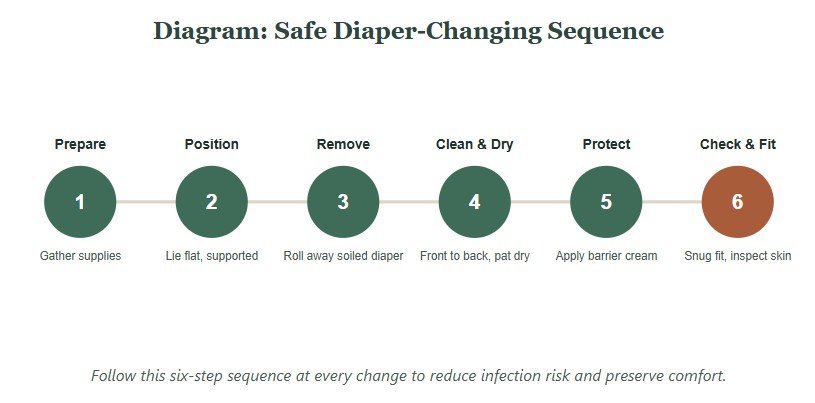
Step-by-Step Diaper Care for Elderly Adults
Once a diaper is part of the daily routine, technique matters as much as the product itself. Rushing a change increases the risk of skin tears, falls, and infection. Follow this sequence every time.
- Gather supplies first. Clean diaper, disposable gloves, barrier cream, wipes or warm water with a washcloth, a plastic bag for disposal, and a change of clothing if needed — all within arm’s reach before you begin.
- Explain what you’re doing. Even with cognitive decline, narrate each step calmly. This reduces anxiety and resistance, especially for people living with dementia.
- Position safely. Have the person lie on their back if in bed, or assist a seated change if they can stand briefly with support — seated or standing changes reduce fall risk compared to awkward bed transfers.
- Remove the soiled diaper by unfastening the tabs, folding the front over the soiled area, and rolling it away from the body to contain mess.
- Clean front to back using wipes or a warm washcloth, always moving away from the urethra to prevent spreading bacteria toward it — this single step is the biggest factor in preventing urinary tract infections.
- Dry the skin completely. Pat, don’t rub. Trapped moisture is the number one cause of diaper rash in elderly skin, which is thinner and heals more slowly than younger skin.
- Apply barrier cream in a thin, even layer over clean, dry skin to create a moisture-repelling barrier before the new diaper goes on.
- Fit the new diaper snugly but not tight — you should be able to slide two fingers under the waistband comfortably.
- Check for redness or skin breakdown at every single change, particularly around skin folds, and note any changes to report to a nurse or doctor.
Dignity tip: Keep the door closed, use a towel for coverage during the process, and avoid rushing or showing frustration. Many older adults describe the loss of privacy around toileting as more distressing than the incontinence itself — a calm, matter-of-fact approach protects their self-respect.
Choosing the Right Adult Diaper
Not every product suits every situation. The right choice depends on mobility, leakage severity, and whether the person can assist with dressing themselves.
| Type | Best For | Pros | Watch Out For |
|---|---|---|---|
| Pull-up / protective underwear | Mobile, semi-independent seniors | Feels like regular underwear; easy self-use | Lower absorbency than tab-style briefs |
| Tab-style briefs | Bedridden or low-mobility seniors | Adjustable fit; easier for a caregiver to change lying down | Requires full assistance to change |
| Overnight / heavy-absorbency briefs | Heavy or severe overnight leakage | Longer wear time; fewer night wake-ups | Bulkier; more expensive per unit |
| Booster pads / liners | Mild leakage, added protection | Low-cost add-on to existing underwear | Not sufficient alone for moderate-heavy incontinence |
| Bariatric briefs | Larger body sizes needing extra coverage | Wider fit prevents gapping and leaks | Limited availability in some retail stores |
When comparing products, prioritize breathable, moisture-wicking materials — they reduce the odds of the yeast and bacterial infections that thrive in warm, damp conditions. Many insurance plans and Medicaid waiver programs cover incontinence supplies for eligible seniors, so it’s worth checking coverage before buying in bulk.
Preventing Diaper Rash & Skin Breakdown
Elderly skin is thinner, drier, and slower to heal than younger skin, which makes rash prevention a daily priority rather than a reaction to a problem that’s already appeared.
- Change frequently — check every 2–3 hours during the day and immediately after bowel movements.
- Avoid scented products — fragranced wipes and powders can irritate sensitive skin.
- Let skin air out for a few minutes at each change before applying a fresh diaper.
- Use zinc-oxide barrier creams rather than petroleum-only products for stronger moisture protection.
- Watch for early redness in skin folds — catching irritation early prevents it from progressing to open sores.
- Reposition regularly for bedridden individuals to relieve pressure and reduce the combined risk of pressure ulcers and rash.
When to call a doctor: Persistent redness lasting more than 2–3 days, blistering, foul odor, or visible skin breakdown can signal infection and needs medical evaluation — don’t rely on over-the-counter creams alone.
Common Diaper Care Mistakes to Avoid
Even experienced caregivers fall into a few avoidable habits that undermine otherwise good diaper care for elderly patients.
- Choosing a diaper based on price alone rather than absorbency and fit
- Rubbing instead of patting the skin dry, which increases irritation
- Fastening the diaper too tightly, restricting circulation and comfort
- Skipping barrier cream because “the skin looks fine today”
- Not tracking a changing schedule, leading to prolonged wet-diaper exposure
Why Elderly Adults Need Feeding Assistance
Just as bladder control changes with age, so do chewing strength, saliva production, and the coordination needed to safely swallow. Feeding assistance for elderly adults becomes necessary for reasons ranging from arthritis that makes gripping utensils painful, to dementia that affects recognizing food, to dysphagia — swallowing difficulty — which research estimates affects roughly 8% of the global population and rises sharply with age and neurological conditions such as stroke or Parkinson’s disease, according to findings published in the peer-reviewed journal Dysphagia.
Recognizing the early signs matters because unmanaged feeding difficulty leads quickly to two serious outcomes: malnutrition/dehydration, and aspiration pneumonia, where food or liquid enters the lungs instead of the stomach.
| Sign | Possible Meaning |
|---|---|
| Coughing or “wet,” gurgly voice after swallowing | Liquid or food may be entering the airway |
| Food pocketing in the cheeks | Reduced tongue control or awareness of food in the mouth |
| Unexplained weight loss | Insufficient calorie or nutrient intake |
| Meals taking 45+ minutes | Fatigue, chewing difficulty, or swallowing hesitation |
| Refusing previously liked foods | Pain while chewing, taste changes, or depression |
Step-by-Step Feeding Assistance for Elderly Adults
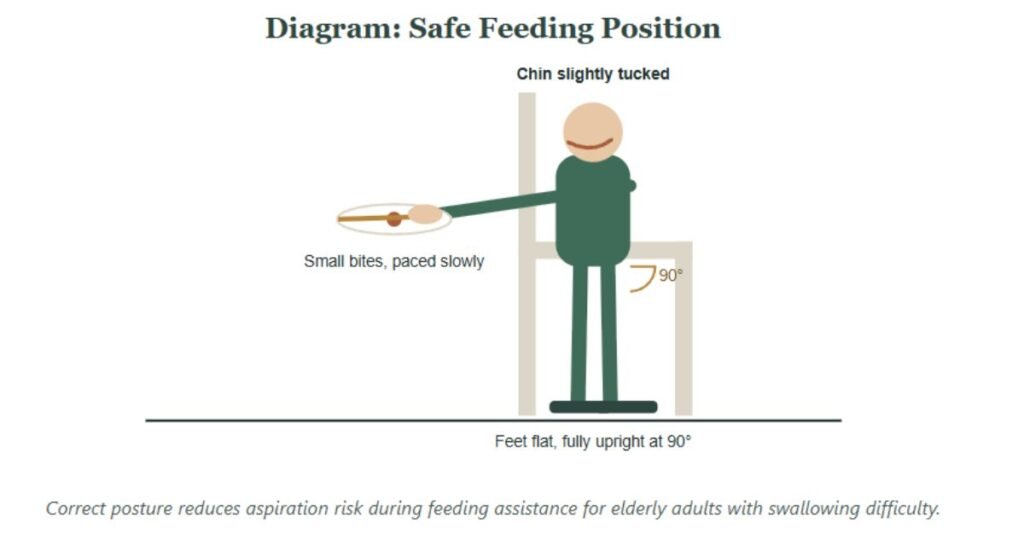
Safe feeding is about posture, pacing, and attentiveness as much as the food itself. Use this sequence for every meal that requires hands-on help.
- Sit them upright at 90 degrees — never feed someone lying down or reclined, even in bed.
- Tuck the chin slightly toward the chest; looking upward while swallowing significantly raises choking risk.
- Do a mouth check before starting — clean teeth or dentures improve both appetite and safety.
- Offer small bites and sips, roughly a teaspoon at a time, and never rush between mouthfuls.
- Watch, don’t just feed — confirm each bite is fully swallowed before offering the next.
- Alternate food and liquid to help clear the mouth and reduce residue.
- Stay engaged in conversation where appropriate, but pause talking while they’re actively swallowing.
- Keep them upright for 30 minutes after the meal to reduce reflux and aspiration risk.
Food Texture Levels for Swallowing Difficulty (IDDSI Framework)
When chewing or swallowing becomes unsafe at a regular texture, caregivers, dietitians, and speech-language therapists use the International Dysphagia Diet Standardisation Initiative (IDDSI) — a globally standardized 8-level scale for food texture and drink thickness. Using the same terminology as your loved one’s care team prevents dangerous mix-ups between “soft” and “pureed.”
| Level | Label | Applies To | Example |
|---|---|---|---|
| 0 | Thin | Drinks | Water, tea |
| 1 | Slightly Thick | Drinks | Lightly thickened juice |
| 2 | Mildly Thick | Drinks | Thickened milk |
| 3 | Liquidised / Moderately Thick | Drinks & food | Smooth soup |
| 4 | Pureed / Extremely Thick | Drinks & food | Smooth mashed potato |
| 5 | Minced & Moist | Food | Soft minced meat with gravy |
| 6 | Soft & Bite-Sized | Food | Tender, small-cut casserole |
| 7 | Regular / Easy to Chew | Food | Normal diet, cut appropriately |
Never guess at texture modification on your own if a swallowing evaluation has been recommended — a speech-language pathologist assesses the exact safe level, and getting it wrong in either direction (too thin a liquid, or food that’s too firm) raises choking and aspiration risk.
Recognizing & Responding to Choking
Every caregiver providing feeding assistance for elderly adults should know how to respond to choking before it happens, not while it’s happening.
| Situation | Action |
|---|---|
| Person is coughing forcefully | Do not interfere — a strong cough can clear the airway on its own |
| Person cannot cough, speak, or breathe | Perform abdominal thrusts (Heimlich maneuver) immediately |
| Person is in a wheelchair | Perform thrusts from behind while they remain seated |
| Person becomes unconscious | Begin CPR and check the mouth for visible obstruction between compression cycles |
Every caregiver should complete a certified CPR and choking-response course. The American Red Cross and local hospitals frequently offer low-cost or free classes for family caregivers.
When to Bring in Professional Help
Family caregivers often push through exhaustion long past the point where outside help would improve outcomes for everyone involved. Consider bringing in a home health aide, visiting nurse, or facility-based care if any of the following apply.
- Diaper rash or skin breakdown isn’t improving despite consistent care
- Coughing, choking, or a wet voice occurs regularly during meals
- Significant unintentional weight loss over the past 1–2 months
- The physical demands of lifting, transferring, or changing are causing caregiver injury
- You’re experiencing caregiver burnout, exhaustion, or resentment that affects patience and safety
Reaching out isn’t a failure — geriatric care specialists consistently note that caregiver wellbeing directly affects care quality, so protecting your own capacity is part of protecting your loved one.
Frequently Asked Questions
How often should you change an elderly adult’s diaper?
Check every 2–3 hours during the day and immediately after any bowel movement. Overnight, check at least once, using a higher-absorbency product to extend comfortable wear time.
What is the best position for feeding an elderly person with swallowing difficulty?
Fully upright at 90 degrees, chin slightly tucked, feet flat on the floor, remaining upright for at least 30 minutes after the meal ends.
What causes diaper rash in elderly adults and how can it be prevented?
Prolonged moisture contact, friction, and bacteria are the main causes. Prevent it with frequent changes, gentle front-to-back cleansing, thorough drying, and a breathable barrier cream at every change.
What are signs that an elderly person needs more feeding assistance?
Unexplained weight loss, coughing or a wet voice during meals, food pocketing in the cheeks, and meals routinely taking far longer than usual are all signs it’s time to step in more directly.
How do you convince an elderly parent to wear a diaper?
Frame the conversation around comfort, confidence, and staying active — not embarrassment. Offer discreet pull-up styles, let them choose the product, and keep the conversation private.
What is the IDDSI framework for feeding elderly patients?
IDDSI is an internationally standardized 8-level scale (0–7) that describes food texture and drink thickness for people with dysphagia, giving caregivers, dietitians, and clinicians one shared language.
Reviewed by the Senior Caregiving Editorial Team
Content is compiled from geriatric nursing best practices, peer-reviewed dysphagia research (IDDSI Framework), and guidance from national aging and caregiving organizations. This article is for general educational purposes and does not replace personalized medical advice — always consult your loved one’s physician, nurse, or speech-language pathologist for individual care decisions.
Sources referenced: National Institute on Aging (nia.nih.gov), AARP/National Alliance for Caregiving, International Dysphagia Diet Standardisation Initiative (iddsi.org), American Red Cross (redcross.org), peer-reviewed research published in Dysphagia journal.
You may also like : Home Healthcare in India, Female Healthcare Attendant at Home, Male Healthcare Attendant at Home, Female Healthcare Attendant at Home in Delhi, Female Healthcare Attendant at Home in Noida, Female Healthcare Attendant at Home in Guragon, Male Healthcare Attendant at Home, Male Healthcare Attendant at Home in Delhi, Male Healthcare Attendant at Home in Noida
