
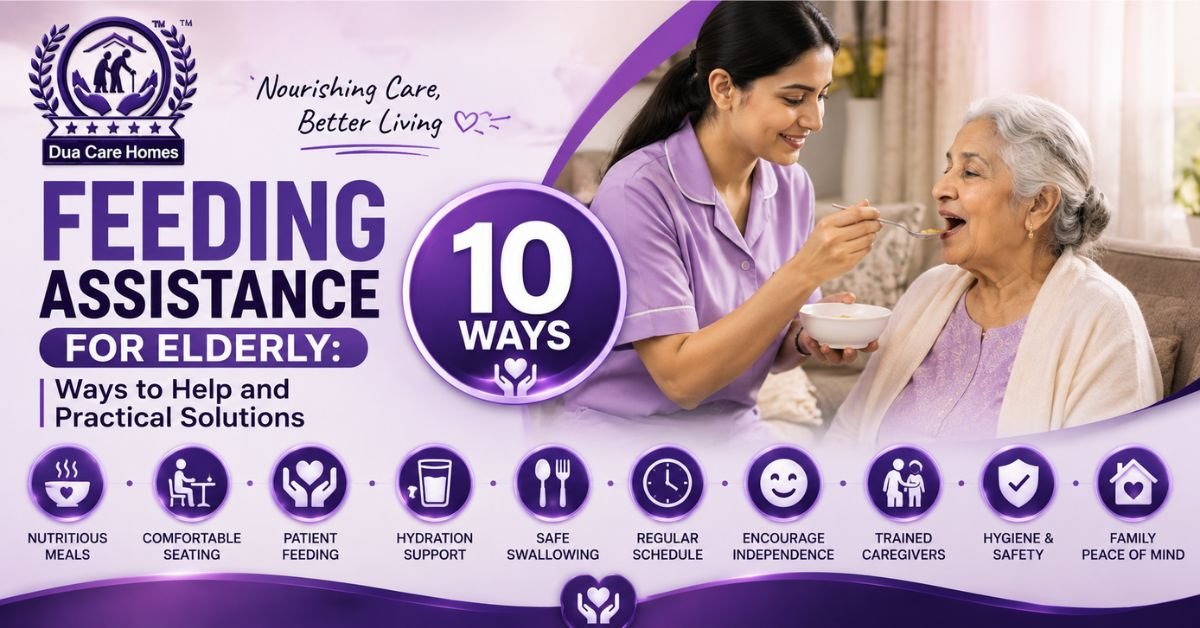
Mealtimes can quietly become one of the hardest parts of caregiving. When a parent or loved one struggles to eat safely, the right feeding assistance for elderly individuals isn’t just about convenience — it’s about preventing choking, malnutrition, and dangerous complications like aspiration pneumonia. This guide breaks down 10 practical, medically grounded feeding assistance for elderly solutions, along with the tools, techniques, and warning signs every caregiver should know before the next meal. Whether you’re caring for a parent with dementia, recovering from a stroke, or simply losing strength with age, these steps are designed to keep mealtimes safe, dignified, and genuinely nourishing.
Why Feeding Assistance Matters More Than Most Families Realise
Difficulty eating isn’t just an inconvenience for older adults — it’s a genuine medical risk. Swallowing difficulty, known clinically as dysphagia, becomes far more common with age, and it’s closely linked to some of the most serious health complications seniors face.
Research shows swallowing problems affect a significant share of older adults, and the risk climbs sharply in hospital and care-home settings. According to a review published in NIH’s National Center for Biotechnology Information, dysphagia prevalence among elderly patients hospitalised with pneumonia has been reported above 90%, with silent aspiration occurring in over half of these cases. Community-based studies place general dysphagia prevalence among independently living seniors at around 13.8%, with nursing home rates reported as high as 40–60%.
The consequence of unmanaged swallowing difficulty is aspiration pneumonia — a lung infection caused by food, liquid, or saliva entering the airway instead of the stomach. It remains one of the leading causes of hospitalisation and death among older adults, making safe feeding assistance a genuine medical priority, not just a caregiving nicety.
Dysphagia and Feeding-Related Risk: Key Data
| Statistic | Finding |
|---|---|
| Dysphagia prevalence in community-dwelling elderly | 13.8% |
| Dysphagia prevalence in nursing home residents | 40–60% (up to 52.7% in some studies) |
| Dysphagia prevalence among elderly hospitalised with pneumonia | Above 90% in some cohorts |
| Aspiration pneumonia share of community-acquired pneumonia cases | 5–15% |
| Dysphagia’s association with aspiration pneumonia risk | Increases odds significantly (aOR = 8.04 in hospitalised patients) |
These numbers make one thing clear: feeding assistance isn’t a minor daily task. Done correctly, it protects against some of the most common and preventable health emergencies in older age.
Signs an Elderly Person May Need Feeding Assistance
Feeding difficulties don’t always announce themselves clearly. Watch for these signs, which often develop gradually.
- Coughing, throat-clearing, or a “wet” or gurgly voice during or after eating
- Food or liquid dribbling from the mouth while eating
- Taking unusually long to finish a meal
- Pocketing food in the cheeks instead of swallowing
- Unexplained weight loss or reduced appetite
- Avoiding certain foods or liquids without explanation
- Frequent low-grade fevers or repeated chest infections
If two or more of these signs are present, it’s worth requesting a swallowing evaluation from a doctor or speech-language pathologist before continuing regular feeding at home.
10 Ways to Help With Feeding Assistance for Elderly Loved Ones
1. Get the Positioning Right First
Positioning is the single most important safety factor in feeding assistance, and it’s often overlooked. The senior should sit upright at roughly 90 degrees — not reclined — with hips, knees, and ankles bent close to a right angle and feet flat on the floor.
The head should stay neutral or slightly tilted forward, chin gently tucked. This position narrows the airway opening during swallowing, significantly reducing choking and aspiration risk. After eating, keep the person upright for at least 30 minutes to prevent reflux and reduce aspiration risk further.
2. Create a Calm, Distraction-Free Mealtime Environment
A noisy, rushed, or overstimulating environment increases the chance of choking, especially for seniors with cognitive decline. Turn off the television, minimise background conversation, and allow the person to focus entirely on eating.
Soft, familiar music can help some seniors relax, while others do better with complete quiet. Sit at eye level with the person rather than standing over them — this feels less intimidating and allows better observation of swallowing cues.
3. Modify Food Texture Based on Swallowing Ability
Not every senior needs texture modification, but for those with diagnosed dysphagia, it’s one of the most effective safety measures available. A speech-language pathologist or dietitian can recommend the right consistency — minced, moist, pureed, or thickened liquids — based on an individual swallowing assessment.
| Texture Level | Best Suited For | Examples |
|---|---|---|
| Regular, easy-to-chew | Mild chewing difficulty, no swallowing issues | Soft-cooked vegetables, tender meats |
| Minced and moist | Moderate chewing/swallowing difficulty | Ground meat with gravy, mashed vegetables |
| Pureed | Significant dysphagia | Smooth soups, pureed fruits, blended dals |
| Thickened liquids | Difficulty swallowing thin fluids safely | Nectar- or honey-thickened water, juice |
Never modify a senior’s diet without professional guidance — over- or under-thickening liquids can create new risks rather than solving existing ones.
4. Use Adaptive Feeding Tools
Simple adaptive equipment can restore a surprising amount of independence, reducing the need for full hand-feeding in many cases.
- Angled or built-up handle utensils for seniors with limited grip strength
- Weighted utensils to reduce hand tremors
- Scooped plates or plate guards to help push food onto the utensil
- Non-slip mats underneath plates and bowls to prevent sliding
- Nosey cups (cups with a cutout for the nose) that allow drinking without tilting the head back
- Two-handled cups for better grip stability
These tools are inexpensive, widely available, and often make the biggest difference for seniors who want to maintain some independence at the table.
5. Pace the Meal and Encourage Independence
Rushing is one of the most common — and most dangerous — feeding assistance mistakes. Offer small bites, and wait until the person has fully chewed and swallowed before offering the next one. Watch closely for coughing, throat-clearing, or a change in breathing before continuing.
Where the senior can hold a utensil but struggles to guide food to their mouth, use the “hand-over-hand” technique: place your hand gently over theirs to guide movement, rather than taking the utensil away entirely. This preserves dignity and encourages continued use of remaining motor skills.
6. Prioritise Oral Hygiene Before and After Meals
Oral hygiene is frequently overlooked in feeding assistance conversations, yet it directly affects both appetite and aspiration pneumonia risk. Bacteria that build up in the mouth can be aspirated into the lungs, contributing to infection even in small amounts.
Assist with rinsing the mouth before meals to stimulate appetite, and clean the mouth thoroughly afterward — checking for pocketed food in the cheeks that could later become a choking hazard. For seniors with dentures, confirm they fit properly and are worn correctly during meals; poorly fitting dentures are a common, fixable cause of reduced food intake.
7. Monitor Hydration Separately From Meals
Dehydration is a serious and often silent risk for elderly individuals, frequently leading to hospitalisation. Seniors with swallowing difficulty may unconsciously avoid drinking fluids because swallowing liquids feels harder or riskier than swallowing solids.
Offer small sips of water or thickened fluids (if recommended) between bites, not just at the start or end of a meal. Track fluid intake across the day, not just during meals, and watch for signs of dehydration such as dry mouth, confusion, or dark urine.
8. Use Clear Verbal and Visual Cues
For seniors with dementia or cognitive decline, simple, consistent communication makes mealtimes safer and less stressful. Use short, direct phrases like “take a bite” or “time to swallow” rather than long explanations.
Visual cues help too — mimicking the act of eating, naming each food item before offering it, and keeping only one food item visible on the plate at a time can reduce confusion and improve focus. Avoid speaking in a rushed or infantilising tone; seniors with cognitive impairment often retain awareness of how they’re being treated, even when verbal communication is limited.
9. Know the Warning Signs of Choking and How to Respond
Every caregiver providing regular feeding assistance should know the signs of choking and the appropriate emergency response. Watch for: sudden coughing, inability to speak or breathe, clutching the throat, or a bluish tint to the lips or face.
If choking occurs and the person cannot cough forcefully or breathe, perform abdominal thrusts (the Heimlich manoeuvre): stand behind them, wrap your arms around the waist, and thrust inward and upward until the object clears or emergency help arrives. For a person in a wheelchair, thrusts can be performed from behind while seated. Learning proper technique through a certified first-aid course is strongly recommended for any regular caregiver.
10. Bring in Professional Support When Needed
Feeding assistance can become physically and emotionally demanding, especially for family caregivers managing it alongside other responsibilities. Recognising when to bring in professional help isn’t a failure — it’s often the safest choice for everyone involved.
A speech-language pathologist can properly diagnose and manage swallowing difficulties — the American Speech-Language-Hearing Association maintains a directory of certified specialists and consumer resources on dysphagia. A registered dietitian can design a nutrition plan that balances safety with adequate calorie and protein intake. A trained home-care aide or nurse can provide hands-on feeding assistance during the day, particularly for seniors who need supervision at every meal. The National Institute on Aging also offers free, evidence-based caregiving guides worth reviewing alongside professional consultation.
Nutrition Tips to Pair With Feeding Assistance
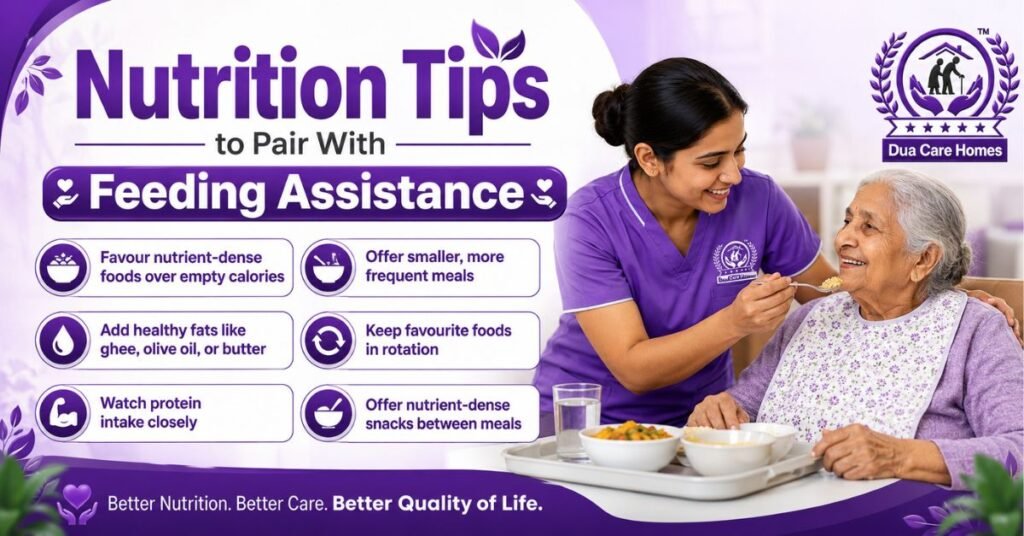
Safe feeding technique solves half the problem — the other half is making sure meals actually deliver the nutrition an ageing body needs. Older adults often eat less overall, which makes every bite count more.
- Favour nutrient-dense foods over empty calories — eggs, dairy, nut butters, and legumes pack more nutrition into smaller portions.
- Offer smaller, more frequent meals if large plates feel overwhelming or exhausting to finish.
- Add healthy fats like ghee, olive oil, or butter to pureed or soft foods to boost calories without increasing volume.
- Keep favourite foods in rotation — familiar flavours often improve appetite more than “healthy” substitutes the person dislikes.
- Watch protein intake closely, since inadequate protein contributes to muscle loss, frailty, and slower recovery from illness.
- Offer nutrient-dense snacks between meals, such as yoghurt, mashed banana, or soft cheese, to offset days when full meals go unfinished.
A registered dietitian can help build a meal plan that balances these nutritional needs with any texture or swallowing restrictions already in place.
Common Feeding Assistance Mistakes to Avoid
Even caring, attentive caregivers can unintentionally make mealtimes riskier. Being aware of these common mistakes helps prevent avoidable complications.
Rushing the Meal
Offering bite after bite without waiting for a full swallow is one of the most common causes of choking during feeding assistance. Always confirm the mouth is clear before offering more food.
Ignoring Early Warning Signs
A single cough during a meal isn’t necessarily alarming, but a pattern of coughing, throat-clearing, or voice changes after eating shouldn’t be dismissed as “just getting older.” These are the exact signs that warrant a swallowing evaluation.
Skipping Oral Care
Many caregivers focus entirely on food and forget the mouth itself. Poor oral hygiene increases bacteria that can be aspirated into the lungs, raising pneumonia risk even when swallowing technique is otherwise correct.
Talking Down to the Person Being Fed
Using a “baby voice” or child-like language during feeding, even unintentionally, can feel deeply undignified for an elderly adult. Respectful, age-appropriate communication should continue regardless of how much physical assistance is needed.
Modifying Diet Without Professional Guidance
Well-meaning caregivers sometimes puree food or thicken liquids based on guesswork rather than a professional swallowing assessment. Incorrect modifications can cause new problems, from inadequate nutrition to reduced fluid intake.
Comparison: Feeding Assistance Approaches by Condition
Different underlying conditions call for different feeding assistance strategies. This comparison helps identify the right approach based on the specific challenge involved.
| Condition | Primary Risk | Key Feeding Assistance Focus |
|---|---|---|
| Dysphagia (swallowing difficulty) | Aspiration, choking | Texture modification, upright positioning, thickened liquids |
| Dementia / cognitive decline | Forgetting to chew/swallow, distraction | Simple verbal cues, one food at a time, calm environment |
| Limited mobility / tremors | Difficulty self-feeding | Adaptive utensils, weighted tools, hand-over-hand guidance |
| Post-stroke recovery | Weakness on one side, swallowing changes | Positioning on stronger side, professional swallowing assessment |
| Reduced appetite / frailty | Malnutrition, weight loss | Smaller, frequent meals, favourite foods, nutrient-dense options |
Frequently Asked Questions
Q1. How do I know if my elderly parent needs feeding assistance?
Watch for coughing during meals, a wet or gurgly voice after swallowing, food pocketing in the cheeks, unexplained weight loss, or meals that take unusually long to finish. Any of these signs warrants a conversation with a doctor.
Q2. What is the safest position for feeding an elderly person?
Upright at roughly 90 degrees, with the chin slightly tucked and feet flat on the floor or a footrest. This position significantly reduces the risk of choking and aspiration during swallowing.
Q3. Should I thicken liquids for someone with swallowing difficulty?
Only under the guidance of a speech-language pathologist or doctor. Incorrect thickening can create new risks, including dehydration if the person avoids drinking altogether.
Q4. What’s the difference between hand-over-hand and full spoon-feeding?
Hand-over-hand involves gently guiding the person’s own hand while they still hold the utensil, preserving some independence. Full spoon-feeding is used when the person can no longer hold or use utensils safely at all.
Q5. How can I tell if someone is choking versus just coughing normally?
A person who can cough forcefully and make sound is usually clearing their airway on their own — let them continue coughing. If they cannot cough, speak, or breathe, or their lips or face turn bluish, this is a medical emergency requiring immediate action.
Q6. When should I involve a professional instead of managing feeding at home?
If choking episodes recur, weight loss continues despite feeding assistance, or a formal swallowing evaluation hasn’t been done, it’s time to involve a speech-language pathologist, dietitian, or trained home-care professional.
Conclusion: Small Changes, Safer Mealtimes
Feeding assistance for elderly loved ones isn’t about taking over — it’s about creating the safest possible conditions for them to eat with dignity, comfort, and as much independence as their health allows. Positioning, pacing, the right tools, and knowing when to call in professional support can meaningfully reduce the risk of choking, malnutrition, and aspiration pneumonia.
Follow Us On : Facebook, Twitter, Instagram
You May Like : Old Age Home, Best Old Age Home, Old Age Home in Noida
