

Worrying about elderly parents living alone is one of the most common concerns adult children face today. Whether your mom or dad recently lost a spouse, retired, or simply prefers independence, elderly parents living alone face unique risks — but with the right steps, most can safely stay in their own homes for years. This guide breaks down 6 reasons behind solo aging, 8 warning signs to watch for, 9 practical steps, and 10 real ways to overcome the challenges together.
Why Are So Many Elderly Parents Living Alone? 6 Key Reasons Explained
Solo aging isn’t a niche situation — it’s a growing national reality. Nearly 14 million older adults, or close to 30 percent of seniors, currently live by themselves, and that number keeps climbing as life expectancy rises and family structures shift.
Understanding why this happens helps families respond with empathy instead of panic. Below are the most common reasons elderly parents end up living alone.
| Reason | What It Looks Like | Family Impact |
|---|---|---|
| Loss of a spouse | Widowhood is the single biggest trigger for solo living in later life | Increased risk of loneliness and depression |
| Adult children moved away | Careers, marriage, or relocation take families out of the same city | Fewer daily eyes on parent’s wellbeing |
| Desire for independence | Many seniors strongly value autonomy and familiar surroundings | Resistance to moving or accepting help |
| Financial considerations | Assisted living can be expensive; staying home is often cheaper | Delayed care decisions |
| Attachment to home/community | Long-term neighbors, routines, and memories keep parents rooted | Reluctance to relocate even when health declines |
| Divorce or estrangement | Family relationships change later in life too | Smaller support network |
Recognizing these root causes is the first step toward building a support plan that respects your parent’s independence while keeping them safe.
Common Challenges Elderly Parents Living Alone Face
Living independently doesn’t automatically mean living safely. As mobility, memory, and senses change with age, everyday tasks can quietly become hazardous.
Physical safety risks top the list. Falls are the leading cause of injury among people 65 and older, and more than one in four older adults reports falling every year, according to the CDC. A fall in an empty house can go unnoticed for hours.
Social isolation and loneliness are just as serious. Reduced social contact is linked to higher risks of depression, cognitive decline, and even heart disease in older adults.
Missed medications, poor nutrition, and financial vulnerability (including scams targeting seniors) round out the biggest concerns families report.
Quick Comparison: Risks vs. Practical Fixes
| Risk Area | Common Problem | Simple Fix |
|---|---|---|
| Mobility | Falls on stairs, in bathrooms, on loose rugs | Grab bars, non-slip mats, decluttering |
| Health | Missed or incorrect medication doses | Pill organizers, automatic dispensers |
| Social | Loneliness after loss of spouse or friends | Scheduled calls, senior centers, day programs |
| Nutrition | Skipped meals, poor grocery access | Meal delivery, grocery pickup services |
| Emergency response | No way to call for help after a fall | Medical alert devices, smart speakers |
| Finances | Scams, unpaid bills, missed fraud alerts | Bank alerts, trusted-contact setup, regular check-ins |
8 Warning Signs Your Elderly Parent May Need More Support
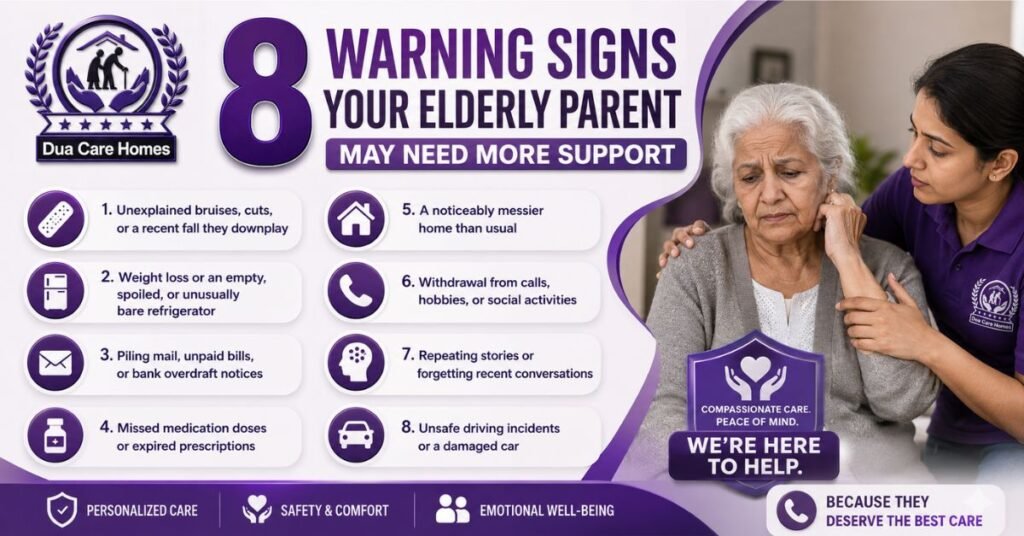
Not every sign means it’s time for major change, but a pattern of the following should prompt a closer look:
- Unexplained bruises, cuts, or a recent fall they downplay
- Weight loss or an empty, spoiled, or unusually bare refrigerator
- Piling mail, unpaid bills, or bank overdraft notices
- Missed medication doses or expired prescriptions
- A noticeably messier home than usual
- Withdrawal from calls, hobbies, or social activities
- Repeating stories or forgetting recent conversations
- Unsafe driving incidents or a damaged car
If you notice two or more of these signs together, it’s a good time to start a supportive, non-judgmental conversation rather than wait for a crisis.
9 Steps to Help Elderly Parents Living Alone Stay Safe and Independent
Once you understand the risks, the next question is practical: what do you actually do? Follow these steps in order for the most effective, least overwhelming approach.
- Start with an honest, respectful conversation. Ask open questions about how they’re managing rather than issuing demands. Respecting their autonomy builds trust and cooperation.
- Do a full home safety walkthrough. Check lighting, flooring, stairs, and bathroom fixtures for hazards.
- Set up a medical alert or fall-detection device. Wearable pendants, smartwatches, and voice-activated systems can summon help instantly.
- Organize medications clearly. Use a weekly pill box or an automatic dispenser with alarms.
- Build a local support circle. Identify neighbors, friends, or community volunteers who can check in regularly.
- Schedule consistent check-ins. Daily or every-other-day calls, plus in-person visits when possible, catch problems early.
- Review finances together. Set up bill-pay alerts, a trusted contact at their bank, and fraud protection.
- Arrange transportation options. Rideshare accounts, senior shuttle services, or grocery delivery reduce reliance on driving.
- Revisit the plan every few months. Needs change; your support plan should evolve with them.
Home Safety Checklist Table
| Room | Safety Upgrade | Priority |
|---|---|---|
| Bathroom | Grab bars, non-slip mats, raised toilet seat | High |
| Stairs | Handrails on both sides, better lighting | High |
| Kitchen | Stove auto shut-off, accessible storage | Medium |
| Bedroom | Nightlights, clear pathways, bed rail | Medium |
| Entryways | Ramps, no-slip doormats, secure locks | Medium |
| Whole home | Smoke/CO detectors, emergency contact list posted | High |
5 Ways to Overcome Loneliness in Elderly Parents Living Alone
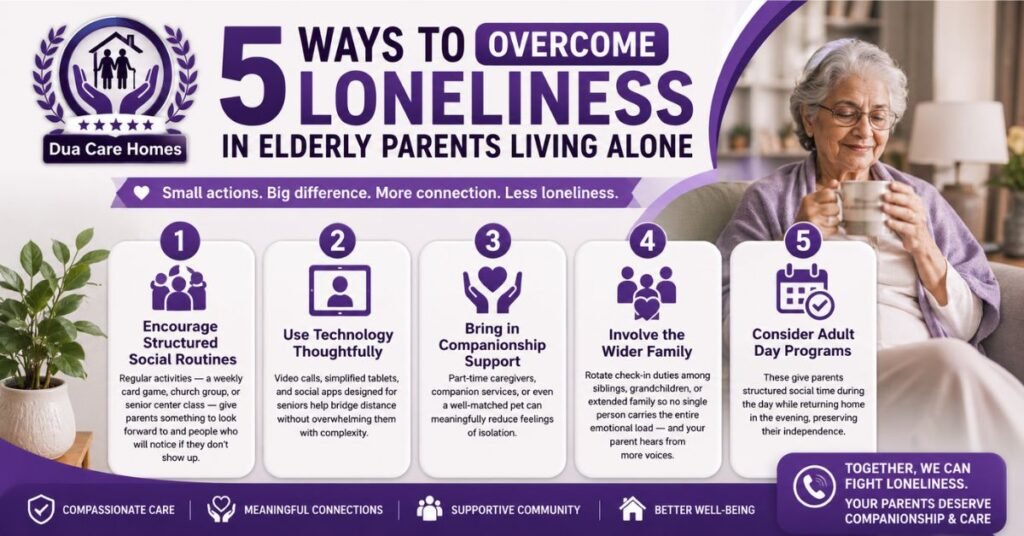
Isolation is often the hardest problem to solve because it’s emotional, not just logistical. These are the most effective ways to overcome loneliness and disconnection in aging parents who live alone.
1. Encourage Structured Social Routines
Regular activities — a weekly card game, church group, or senior center class — give parents something to look forward to and people who will notice if they don’t show up.
2. Use Technology Thoughtfully
Video calls, simplified tablets, and social apps designed for seniors help bridge distance without overwhelming them with complexity.
3. Bring in Companionship Support
Part-time caregivers, companion services, or even a well-matched pet can meaningfully reduce feelings of isolation.
4. Involve the Wider Family
Rotate check-in duties among siblings, grandchildren, or extended family so no single person carries the entire emotional load — and your parent hears from more voices.
5. Consider Adult Day Programs
These give parents structured social time during the day while returning home in the evening, preserving their independence.
5 Ways to Overcome Safety and Health Risks
Beyond loneliness, safety is the other major hurdle. Here’s how families successfully reduce risk without forcing a move.
- Layer your safety net. Combine a medical alert device with neighbor check-ins and family calls so no single point of failure exists.
- Automate what you can. Pill dispensers, smart plugs, and auto-locking doors reduce the number of daily tasks that can go wrong.
- Professionalize what’s needed. A home health aide a few hours a week can cover bathing, meal prep, or housekeeping without full-time care.
- Plan for emergencies in advance. Post emergency numbers, keep a spare key with a trusted neighbor, and confirm your parent knows how to use their alert device.
- Reassess regularly. A safety plan that worked last year may need updating as health changes.
6 Technology and Support Options Compared
| Solution | Best For | Approx. Monthly Cost (USD) |
|---|---|---|
| Medical alert pendant/watch | Fall detection, emergency response | $20–$50 |
| Automatic pill dispenser | Medication adherence | $30–$75 |
| In-home caregiver (part-time) | Daily tasks, companionship | $500–$2,000+ |
| Adult day program | Social engagement, supervised activity | $50–$100/day |
| Meal delivery service | Nutrition, reduced cooking risk | $150–$400 |
| Smart home monitoring (sensors/cameras) | Passive activity monitoring | $10–$40 |
Costs vary by region and provider, so compare local options before committing.
5 Signs It’s Time to Consider More Than Living Alone
Even with strong support systems, there comes a point for some families where independent living is no longer safe. Signs it may be time to explore assisted living or moving in with family include:
- Repeated falls despite safety modifications
- Significant memory loss affecting safety (leaving the stove on, wandering)
- Inability to manage medications even with reminders
- Rapid, unexplained weight loss
- A caregiver reaching burnout trying to manage remote care
If you reach this stage, resources like the National Institute on Aging and the Administration for Community Living offer free guidance on transition options, from in-home care upgrades to assisted living and memory care.
5 Frequently Asked Questions
Is it safe for elderly parents to live alone?
Many seniors live alone safely, especially with home safety modifications, a medical alert system, and regular check-ins. Risk depends on individual health, mobility, and cognitive status rather than age alone.
What is the biggest risk for elderly parents living alone?
Falls are the most common and dangerous risk, according to CDC data, followed by medication errors and social isolation, which can worsen both mental and physical health over time.
How often should you check on an elderly parent who lives alone?
Daily contact — by phone, video call, or in person — is ideal, with at least one in-person visit weekly to assess their home, mood, and physical condition directly.
What are signs an elderly parent shouldn’t live alone anymore?
Repeated falls, missed medications, unexplained weight loss, a noticeably unsafe home, and confusion about time, place, or people are strong signs it’s time to reassess their living situation.
What can I do if my elderly parent refuses help?
Approach the topic gradually, focus on specific safety concerns rather than general capability, involve their doctor if needed, and start with small, low-resistance changes like a medical alert device before suggesting bigger transitions.
Final Thoughts
Supporting elderly parents living alone is rarely about one big decision — it’s about consistently layering small, practical steps: a safer home, a reliable check-in routine, the right technology, and honest conversations. Start with the reasons behind their situation, watch for warning signs, and apply the steps and strategies above to help your parent stay safe, connected, and independent for as long as possible.
Follow Us On : Facebook, Twitter, Instagram
You May Like : Old Age Home, Best Old Age Home, Old Age Home in Noida
