

Aging is not a problem to be solved — it is a phase of life that deserves dignity, comfort, and companionship. Yet for millions of families today, the biggest challenge isn’t loving their elders enough — it’s finding the right kind of help to care for them safely at home. Between demanding careers, nuclear families, and children living in different cities or countries, the traditional model of “someone is always home to care for grandma” has quietly disappeared.
This is exactly why home caregiver services have become one of the fastest-growing needs for Indian families. Whether you are searching for a professional caregiver at home, an elderly caregiver at home, or a dependable senior citizen caregiver at home, this guide will walk you through everything you need to know — what these services actually include, how to evaluate a caregiver, what red flags to avoid, and how a trusted partner like Dua Old Age Caring Institution can make this journey easier for your family.
What Are Home Caregiver Services?
Home caregiver services refer to professional, non-medical or semi-medical support provided to elderly or dependent individuals within the comfort of their own homes. Instead of moving a senior citizen to a hospital, nursing home, or assisted-living facility, a trained caregiver visits or lives with the family to assist with daily activities, mobility, medication reminders, companionship, and emotional wellbeing.
In simple terms: a caregiver brings the care to the person, instead of moving the person to the care.
This model has become the preferred choice for Indian households because it allows seniors to:
- Stay in a familiar, emotionally comforting environment
- Retain independence and dignity
- Remain close to family, neighbours, and community
- Avoid the stress and disorientation often associated with institutional care
Why Families Are Choosing a Professional Caregiver At Home
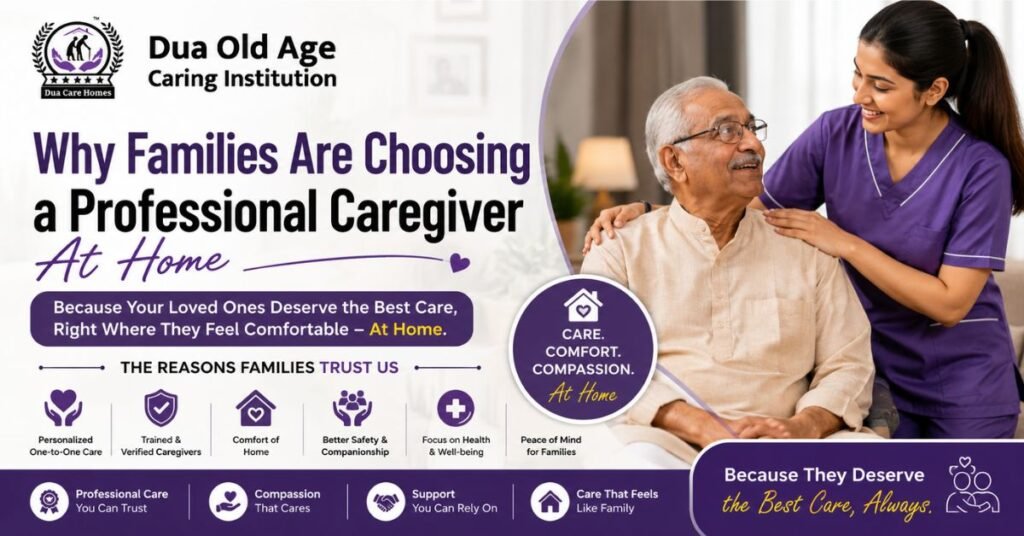
The demand for a professional caregiver at home has grown sharply over the last few years, and it isn’t just a trend — it reflects real, structural changes in how Indian families live.
- Nuclear families and migration — Adult children often live in different cities or countries, leaving aging parents alone.
- Rising life expectancy — More seniors are living into their 80s and 90s, often with chronic conditions that need daily monitoring.
- Post-hospitalisation recovery — Families need skilled support at home after surgery, a fall, or a major illness.
- Working professionals — Dual-income households simply don’t have the bandwidth to provide round-the-clock supervision.
- Rising awareness of elder loneliness — Isolation is now recognised as a serious risk factor for cognitive and physical decline in seniors.
A professional caregiver bridges this gap — offering not just physical assistance, but also emotional presence, structure, and safety.
Types of Elderly Caregiver At Home Services
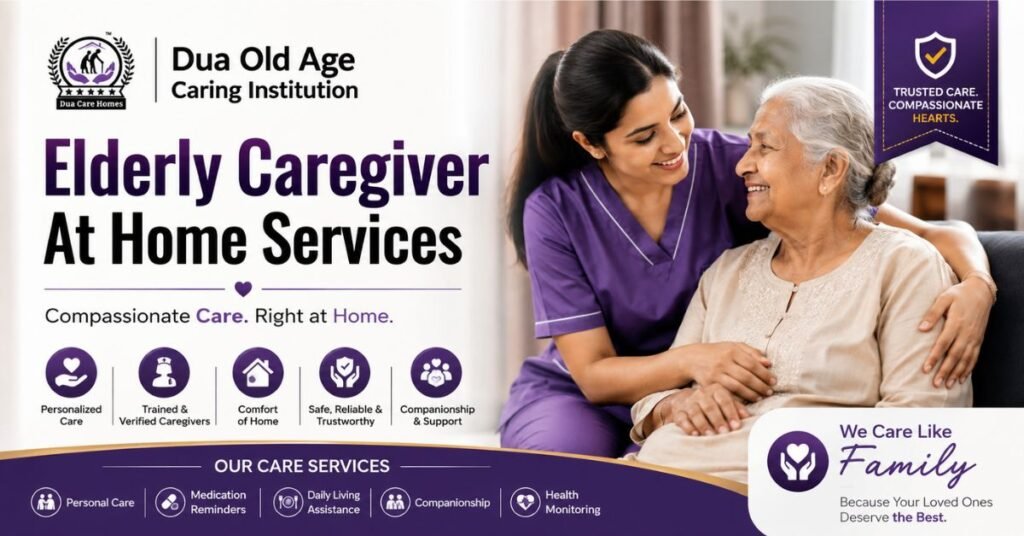
Not every senior needs the same kind of support. Caregiving needs typically evolve as a person ages or as their health condition changes. Here’s a breakdown of the most common categories of elderly caregiver at home services:
| Type of Service | What It Includes | Best Suited For |
|---|---|---|
| Companion Caregiver | Conversation, emotional support, light supervision, accompanying for walks or errands | Seniors who are mobile but live alone |
| Personal Care Attendant | Bathing, dressing, grooming, toileting, mobility assistance | Seniors with limited mobility or frailty |
| Live-in Caregiver | 24-hour presence, round-the-clock monitoring and assistance | Seniors needing constant supervision |
| Post-Hospitalisation Caregiver | Wound care support, medication reminders, recovery monitoring | Seniors recovering from surgery, fall, or illness |
| Dementia & Alzheimer’s Caregiver | Specialised routines, memory-friendly communication, safety-proofing | Seniors with cognitive decline |
| Palliative & End-of-Life Caregiver | Comfort-focused care, symptom management support, emotional support for family | Seniors with terminal or advanced illness |
Understanding which category fits your loved one’s current needs is the first step toward choosing the right service — and a good provider will help you assess this rather than pushing a one-size-fits-all package.
Signs Your Senior Citizen Needs a Caregiver At Home
Many families delay hiring help because they assume their elder is “managing fine.” However, certain warning signs indicate that a senior citizen caregiver at home is no longer optional — it’s necessary.
- Frequent forgetfulness — missed medications, meals, or appointments
- Unexplained bruises, falls, or difficulty walking steadily
- Noticeable weight loss or poor appetite
- Declining personal hygiene or unwashed clothes
- Withdrawal from social activities or hobbies they once enjoyed
- Difficulty managing household bills, calls, or basic tasks
- Signs of depression, anxiety, or increased irritability
- Recent hospitalisation, surgery, or diagnosis of a chronic illness
- Living alone with no daily check-in from family or neighbours
- Family members feeling overwhelmed or guilty about the level of care they can personally provide
If even two or three of these signs are present, it’s time to start the conversation about professional in-home support.
What Does a Professional Caregiver At Home Actually Do?
A common misconception is that caregivers “just sit with” the elderly. In reality, a well-trained caregiver performs a wide range of responsibilities across physical, emotional, and household domains.
Daily Living Support (ADLs)
- Bathing, grooming, and dressing assistance
- Toileting and incontinence care
- Feeding and nutrition support
- Mobility assistance and fall prevention
- Transferring in and out of bed or wheelchair
Household & Instrumental Support (IADLs)
- Medication reminders and schedule tracking
- Meal planning and preparation
- Light housekeeping
- Escorting to doctor visits or diagnostic tests
- Managing daily routines and appointments
Emotional & Cognitive Support
- Companionship and meaningful conversation
- Engagement in hobbies, reading, or light exercise
- Monitoring mood changes and mental wellbeing
- Reducing isolation and loneliness
| Care Category | Examples of Tasks | Frequency |
|---|---|---|
| Physical Care | Bathing, dressing, mobility support | Daily |
| Health Monitoring | Vitals check, medication reminders | Daily/As advised |
| Household Support | Meals, light cleaning, errands | Daily |
| Emotional Support | Companionship, conversation, activities | Ongoing |
| Medical Coordination | Doctor visits, diagnostic follow-ups | As needed |
Qualities to Look for in a Professional Caregiver
Not every caregiver is the right fit for every family. Since this person will be entering your home and building a relationship with your elderly parent, evaluating character and competence matters just as much as experience.
| Quality | Why It Matters |
|---|---|
| Verified background & training | Ensures safety, trustworthiness, and skill in handling elderly-specific needs |
| Patience & emotional intelligence | Elderly care often involves repetition, mood swings, or resistance — patience is essential |
| Basic health knowledge | Ability to recognise warning signs like breathlessness, fainting, or abnormal vitals |
| Communication skills | Should be able to update family members clearly and promptly |
| Punctuality & reliability | Consistency builds trust and routine, which seniors depend on |
| Cultural and language compatibility | Comfort in communication improves emotional connection with the senior |
| Physical fitness | Necessary for lifting, supporting mobility, and handling emergencies |
A trustworthy caregiving partner will always conduct background verification, structured training, and continuous supervision — rather than simply “placing” an untrained individual in your home.
How Home Caregiver Services Typically Work
If you’re new to this process, here is a simple step-by-step overview of how professional home caregiver services are usually set up:
- Initial Consultation — Understanding the senior’s medical history, daily routine, mobility level, and specific needs.
- Needs Assessment — A care coordinator evaluates whether companion care, personal care, or live-in support is required.
- Caregiver Matching — Pairing the senior with a caregiver based on skill set, language, temperament, and availability.
- Care Plan Creation — A structured daily routine is designed, covering health, hygiene, meals, and activities.
- Onboarding & Trial Period — The caregiver begins service, with family feedback incorporated early on.
- Ongoing Monitoring — Regular check-ins, updates to family members, and adjustments to the care plan as needs evolve.
- Emergency Protocols — A clear process for handling falls, medical emergencies, or sudden health changes.
This structured approach — rather than an informal or ad-hoc arrangement — is what separates dependable home caregiver services from risky, unverified alternatives.
Benefits of Elderly Caregiver At Home vs. Institutional Care
Many families weigh the decision between home-based care and moving a senior to a facility. Here’s why in-home care continues to be the preferred choice for most Indian households:
- Emotional comfort — Seniors remain in a familiar environment surrounded by personal memories and belongings.
- One-on-one attention — Unlike institutional settings, home care offers focused, individualised support.
- Family involvement — Loved ones can visit freely and stay closely involved in daily care decisions.
- Lower risk of infection exposure — Compared to shared institutional spaces.
- Preserved independence — Seniors retain a sense of control over their routines and choices.
- Flexible care hours — From a few hours a day to full-time live-in support, care can scale with changing needs.
- Stronger emotional wellbeing — Familiar surroundings are directly linked to lower anxiety and better mental health in older adults.
Choosing the Right Senior Citizen Caregiver At Home: A Checklist
Before finalising any caregiving service, run through this checklist to ensure your family makes an informed, confident decision.
| Checklist Item | Why It’s Important |
|---|---|
| Is the caregiver background-verified? | Ensures safety and trust |
| Is there a structured training program? | Confirms skill and competence |
| Is there a replacement guarantee if the caregiver is unavailable? | Prevents care disruption |
| Is there a dedicated point of contact for the family? | Ensures accountability and communication |
| Are care plans customised to the senior’s specific condition? | One-size-fits-all care often fails specialised needs |
| Is there 24/7 support in case of emergencies? | Critical for peace of mind |
| Does the provider offer trial or short-term engagement? | Helps assess compatibility before long-term commitment |
Common Myths About Home Caregiver Services
Misconceptions often stop families from seeking help early, even when their elderly parent clearly needs support. Let’s clear up some of the most common myths:
| Myth | Reality |
|---|---|
| “Hiring a caregiver means we’re neglecting our parents.” | A caregiver complements family care — it doesn’t replace love, visits, or involvement. It simply ensures safety when family members can’t be present. |
| “Caregivers are only for seriously ill or bedridden seniors.” | Even active, independent seniors benefit from companionship, safety supervision, and light daily assistance. |
| “Any household helper can do this job.” | Elderly care requires specific training in mobility support, hygiene care, emergency response, and recognising early health warning signs — skills a general domestic helper isn’t trained in. |
| “Once hired, we lose control over our parent’s care.” | Reputable providers keep families closely involved through regular updates, care plan reviews, and open communication. |
| “Home care is only a short-term or emergency solution.” | Home caregiver services can be structured as long-term, ongoing support — adapting as the senior’s needs evolve over time. |
Understanding these realities helps families make the decision earlier, rather than waiting for a crisis such as a fall or hospitalisation to force the issue.
How to Talk to Your Elderly Parents About Hiring a Caregiver
One of the most emotionally sensitive parts of this journey isn’t finding a caregiver — it’s having the conversation with your parents in the first place. Many seniors initially resist the idea, fearing a loss of independence or privacy. Here’s how to approach it thoughtfully:
- Start the conversation early, before a health crisis forces a rushed decision.
- Frame it as support, not replacement — explain that a caregiver helps them stay independent longer, rather than taking over their life.
- Involve them in the decision — let them meet the caregiver, ask questions, and share preferences about routines.
- Start with a trial period — a short-term arrangement often eases resistance more effectively than a long-term commitment upfront.
- Acknowledge their emotions — feelings of pride, fear, or loss of control are natural; patience goes a long way.
- Highlight companionship, not just assistance — many seniors respond positively when a caregiver is presented as a companion first, and a helper second.
With the right approach, most families find that initial resistance fades within the first few weeks, once the senior experiences the comfort, structure, and companionship a good caregiver provides.
What to Expect in the First Few Weeks of Home Caregiver Services
The early phase of any caregiving arrangement is an adjustment period — for the senior, the caregiver, and the family. Here’s what typically happens:
- Week 1: Familiarisation — The caregiver learns the senior’s routine, preferences, likes, dislikes, and physical limitations.
- Week 2: Routine Building — A consistent daily schedule begins to take shape around meals, medication, hygiene, and activities.
- Week 3: Trust Building — The senior becomes more comfortable relying on the caregiver for physical and emotional support.
- Week 4 Onward: Stabilisation — Family members typically notice improved consistency in health monitoring, mood, and daily structure.
Families should expect occasional adjustments during this period — such as changing the caregiver’s schedule, communication style, or specific responsibilities — as everyone settles into a rhythm that works.
Why Families Trust Dua Old Age Caring Institution
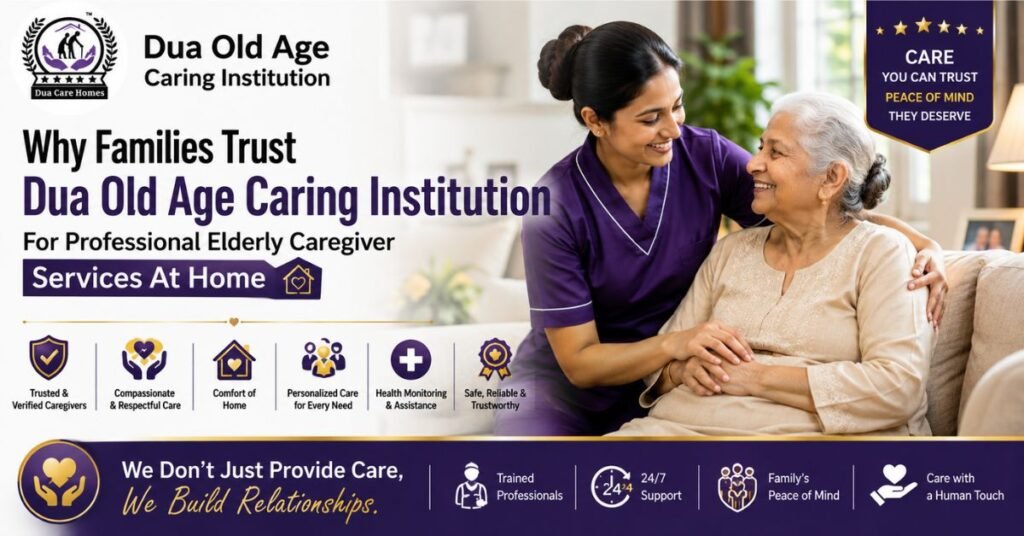
Choosing someone to care for your parents is one of the most emotional decisions a family will ever make — and it deserves a partner who treats that responsibility with the seriousness it demands. Dua Old Age Caring Institution has built its reputation on exactly that principle: compassionate, professional, and dependable elderly care delivered with dignity.
Here’s what sets Dua Old Age Caring Institution apart as a trusted name in home caregiver services:
- Thoroughly trained and verified caregivers — Every caregiver undergoes background checks and structured training in elderly care, hygiene, mobility support, and emergency response.
- Personalised care plans — Care is never generic. Each senior’s routine, medical history, and preferences shape a tailored plan.
- Compassion-first approach — Caregivers at Dua Old Age Caring Institution are selected not just for skill, but for patience, empathy, and genuine warmth toward the elderly.
- Transparent communication with families — Regular updates ensure that family members, even those living far away, stay informed and reassured.
- Support across the full care spectrum — From companionship and daily living assistance to post-hospitalisation recovery and specialised elderly care needs.
- Commitment to dignity — Every interaction is guided by respect for the senior’s independence, privacy, and emotional wellbeing.
For families searching for a professional caregiver at home, an elderly caregiver at home, or a reliable senior citizen caregiver at home, Dua Old Age Caring Institution offers the reassurance that your loved one is not just being “looked after” — they are being genuinely cared for.
Frequently Asked Questions About Home Caregiver Services
1. What is the difference between a caregiver and a nurse?
A caregiver primarily assists with daily living activities, companionship, mobility, and household support. A nurse, on the other hand, is medically trained to handle clinical tasks such as injections, wound dressing, or monitoring medical equipment. Many families use a caregiver for day-to-day support and bring in a nurse only when medical supervision is required.
2. How do I know if my elderly parent needs a live-in caregiver or part-time support?
If your parent has significant mobility limitations, memory issues, or lives alone with health risks, a live-in caregiver is generally safer. If they are largely independent but need help with specific tasks or companionship, part-time or daily-hour support is usually sufficient.
3. Is home caregiving safe for seniors with dementia or Alzheimer’s?
Yes, provided the caregiver has specific training in dementia care. This includes understanding memory-friendly communication, maintaining consistent routines, and creating a safe home environment to prevent wandering or accidents.
4. How is a caregiver different from a domestic helper?
A domestic helper typically manages household chores. A professional caregiver is trained specifically in elderly care — including mobility assistance, medication reminders, hygiene support, and recognising early warning signs of health decline.
5. Can caregiving services be arranged for a short-term period, like after surgery?
Yes. Many families opt for short-term, post-hospitalisation caregiving support to assist with recovery, mobility, and medication schedules before transitioning to a longer-term plan or reduced care.
6. What should I check before hiring a caregiver for my elderly parents?
Always verify the caregiver’s background, training certification, and the agency’s protocols for emergencies, replacements, and communication with family members. Avoid informal or unverified arrangements for elderly care.
7. How much does home caregiver services cost?
Costs vary based on the level of care required — companion care, personal care, or live-in support — as well as duration and specific medical needs. It’s best to request a personalised assessment to understand what your family’s specific situation requires.
8. Can a home caregiver help manage multiple health conditions at once?
Yes, many seniors live with more than one condition — such as diabetes, arthritis, and mild memory loss together. A well-trained caregiver coordinates routines around all of these simultaneously, including diet, medication timing, mobility precautions, and monitoring for warning signs specific to each condition.
9. What happens if the assigned caregiver is unavailable one day?
A reliable home caregiver service will have a replacement protocol in place, ensuring a trained backup caregiver steps in without disrupting the senior’s routine. This is one of the most important things to confirm before signing up with any provider.
10. Is it normal for seniors to resist having a caregiver at first?
Yes, this is extremely common. Many seniors associate a caregiver with a loss of independence. With patience, gradual introduction, and open communication, most seniors adjust within the first few weeks and often come to value the companionship as much as the assistance.
Final Thoughts: Choosing Care That Feels Like Family
Caring for aging parents is not just a logistical decision — it’s an emotional one. The right home caregiver services don’t just help your elder get through the day; they restore a sense of safety, dignity, and companionship that every senior deserves.
Whether you’re looking for a professional caregiver at home, exploring options for an elderly caregiver at home, or trying to find dependable senior citizen caregiver at home support, the goal remains the same: care that feels less like a service, and more like family.
Dua Old Age Caring Institution understands this deeply — and continues to help families across the country give their elders the compassionate, professional care they truly deserve.
You may also like : Dua Old Age Home, Old Age Home, Old Age Home in Noida, Old Age Home in India
