

Long term elderly care is no longer a “someday” decision — it’s a present-day need for millions of families balancing careers, distance, and ageing parents. Whether you are exploring options for a parent who lives alone or planning ahead for your own future, understanding long term elderly care helps you choose the safest, most dignified path forward. This guide breaks down the real benefits, the exact services available, and practical tips families can use today, based on how leading senior care institutions actually operate.
What Is Long Term Elderly Care?
Long term elderly care refers to an ongoing system of medical, personal, and emotional support designed for seniors who can no longer manage all their daily activities independently. It covers everything from help with bathing and dressing to full medical supervision for chronic conditions, dementia, or post-surgery recovery.
Unlike a short hospital stay, long term care is continuous. It can be delivered at home, in a day-care center, or in a residential facility such as an old age home or assisted living community. According to the National Institute on Aging, long-term care involves a wide variety of support services that help people live as independently and safely as possible, based on their evolving needs.
Roughly seven in ten people who reach the age of 65 will eventually need some form of long term elderly care, which is why planning early — rather than reacting during a crisis — leads to far better outcomes for both seniors and their families.
Key Benefits of Long Term Elderly Care
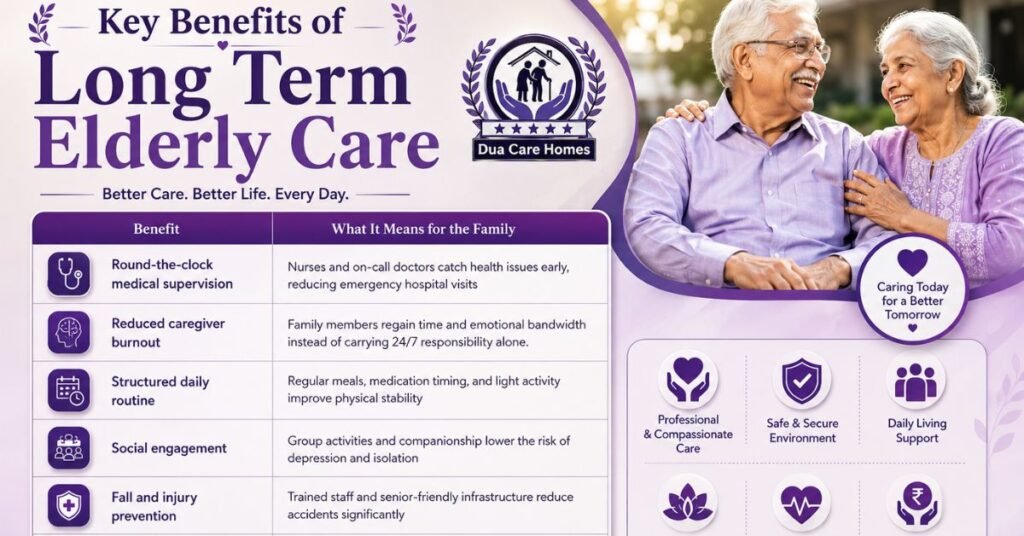
Choosing professional long term care isn’t about giving up on family responsibility — it’s about giving seniors the specialized attention that a busy household often cannot provide every single hour of the day.
| Benefit | What It Means for the Family |
|---|---|
| Round-the-clock medical supervision | Nurses and on-call doctors catch health issues early, reducing emergency hospital visits |
| Reduced caregiver burnout | Family members regain time and emotional bandwidth instead of carrying 24/7 responsibility alone |
| Structured daily routine | Regular meals, medication timing, and light activity improve physical stability |
| Social engagement | Group activities and companionship lower the risk of depression and isolation |
| Fall and injury prevention | Trained staff and senior-friendly infrastructure reduce accidents significantly |
| Peace of mind for NRIs and working children | Regular health updates mean families can stay informed even from another city or country |
These benefits compound over time. A senior who receives consistent physiotherapy, balanced nutrition, and social interaction typically maintains mobility and cognitive function far longer than one managing everything alone at home.
Types of Long Term Elderly Care Services
Not every senior needs the same level of support. Long term elderly care exists on a spectrum, and matching the right service to the right stage of need is the single most important decision a family will make.
1. In-Home Care Services
Caregivers visit the senior’s own home to assist with bathing, dressing, meals, and mobility. This works well for seniors who are largely independent but need supervision for a few hours a day.
2. Assisted Living Facilities
Assisted living blends independence with hands-on help. Residents live in a community setting while trained staff manage medication schedules, mobility support, and daily personal care — ideal for seniors who need consistent, but not intensive, medical attention.
3. Memory Care (Dementia & Alzheimer’s Care)
Specialized care for seniors with cognitive decline. These programs use secured environments, structured routines, and trained staff to reduce confusion, wandering risk, and emotional distress.
4. Skilled Nursing & Post-Surgery Care
For seniors recovering from surgery, stroke, or serious illness, skilled nursing care provides clinical monitoring, wound care, and rehabilitation support until the person stabilizes.
5. Residential Old Age Homes
A full-time residential setting offering shelter, nutrition, medical readiness, and community life — the most comprehensive form of long term elderly care for seniors who need a permanent, safe living arrangement.
6. Respite and Short-Term Care
Temporary care arrangements that give family caregivers a break, or provide a trial stay before committing to permanent residential care.
Signs Your Loved One May Need Long Term Elderly Care
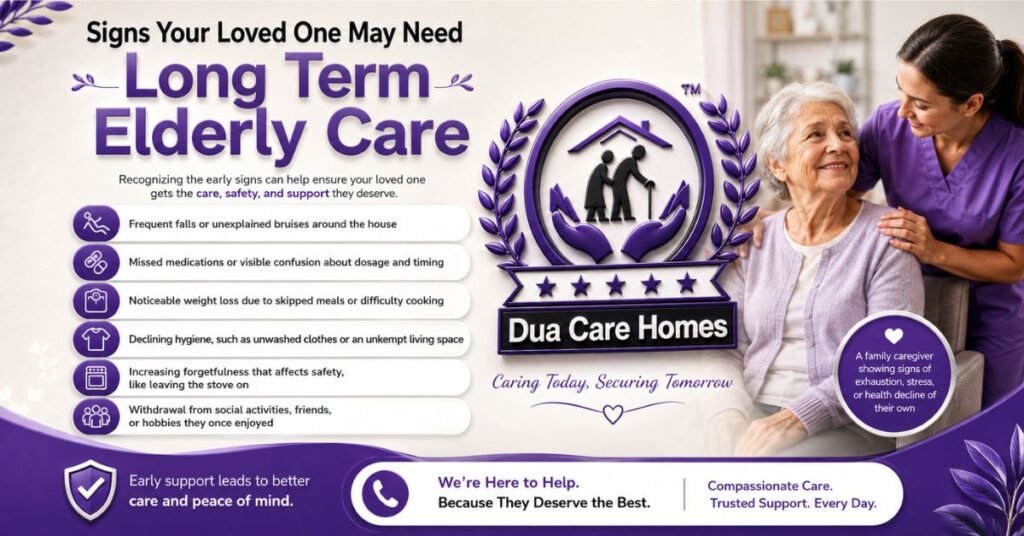
Many families delay this decision because the shift happens gradually rather than overnight. Watch for these warning signs, which often indicate that in-home family care alone is no longer sufficient:
- Frequent falls or unexplained bruises around the house
- Missed medications or visible confusion about dosage and timing
- Noticeable weight loss due to skipped meals or difficulty cooking
- Declining hygiene, such as unwashed clothes or an unkempt living space
- Increasing forgetfulness that affects safety, like leaving the stove on
- Withdrawal from social activities, friends, or hobbies they once enjoyed
- A family caregiver showing signs of exhaustion, stress, or health decline of their own
If two or more of these signs appear consistently, it’s time to have an honest conversation about long term elderly care options — before a medical emergency forces the decision.
Long Term Elderly Care at Home vs. Residential Facility
Families often assume home care is automatically the “gentler” option, but the right choice depends entirely on the senior’s medical needs and the household’s daily capacity. Here’s an honest comparison:
| Factor | In-Home Care | Residential Long Term Care |
|---|---|---|
| Medical monitoring | Limited to visiting hours | Available 24/7 on-site |
| Emergency response time | Depends on distance and availability | Immediate, on-premise staff |
| Social interaction | Minimal unless actively arranged | Built into daily community life |
| Cost predictability | Can rise sharply with increased hours | Usually a fixed, transparent monthly package |
| Family caregiver burden | High, especially for chronic conditions | Significantly reduced |
| Best suited for | Seniors who are largely independent | Seniors needing daily assistance or medical oversight |
Neither option is universally “better” — the goal is matching the model to the senior’s actual, current health status rather than what feels emotionally easier for the family in the short term.
How to Choose the Right Long Term Elderly Care Facility
Selecting a facility is one of the most emotional decisions a family makes. Use this checklist to evaluate any institution before making a commitment:
- Check medical infrastructure — Confirm there is 24/7 nursing support and a doctor-on-call system, not just first-aid supplies.
- Review staff-to-resident ratio — A lower ratio means more attentive, personalized care for every senior.
- Inspect hygiene and safety standards — Visit in person and look for fall-prevention flooring, CCTV monitoring, and clean common areas.
- Ask about flexibility of care plans — A good facility adjusts the care plan as a resident’s health needs change over time.
- Demand transparent pricing — Reputable institutions provide a clear cost breakdown with no hidden charges.
- Read real reviews and speak to resident families — First-hand feedback tells you more than any brochure.
- Evaluate the emotional environment — Residents should be treated as family members, not just patients on a schedule.
A facility that performs well across all seven points is far more likely to deliver dependable, dignified long term elderly care.
Expert Tips for Long Term Elderly Care Planning
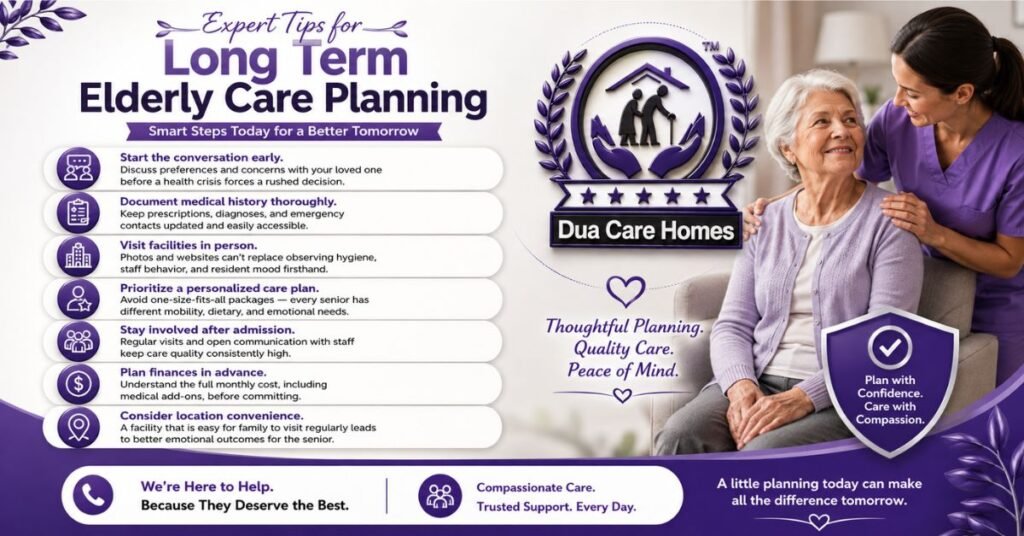
Planning ahead reduces stress dramatically when a health situation changes suddenly. Keep these practical tips in mind:
- Start the conversation early. Discuss preferences and concerns with your loved one before a health crisis forces a rushed decision.
- Document medical history thoroughly. Keep prescriptions, diagnoses, and emergency contacts updated and easily accessible.
- Visit facilities in person. Photos and websites can’t replace observing hygiene, staff behavior, and resident mood firsthand.
- Prioritize a personalized care plan. Avoid one-size-fits-all packages — every senior has different mobility, dietary, and emotional needs.
- Stay involved after admission. Regular visits and open communication with staff keep care quality consistently high.
- Plan finances in advance. Understand the full monthly cost, including medical add-ons, before committing.
- Consider location convenience. A facility that is easy for family to visit regularly leads to better emotional outcomes for the senior.
The World Health Organization notes that healthy ageing depends heavily on supportive environments — reinforcing why the quality of long term elderly care matters as much as its availability.
Cost Factors in Long Term Elderly Care
Costs vary significantly depending on the type and intensity of care required. Here’s a general breakdown of what typically influences pricing:
| Cost Factor | Impact on Monthly Pricing |
|---|---|
| Level of medical supervision needed | Higher for skilled nursing, dementia, or post-surgery care |
| Room type (shared vs. private) | Private rooms cost more than shared accommodation |
| Additional therapies (physiotherapy, specialist visits) | Adds to the base monthly package |
| Dietary requirements | Specialized diets (diabetic, low-sodium) may involve slight adjustments |
| Duration of stay | Short-term/respite stays are usually priced differently from long-term contracts |
Always request a transparent, itemized quote before enrollment — this is one of the clearest signs of a trustworthy long term elderly care provider.
Why Families Trust Dua Old Age Caring Institution

If you are searching for long term elderly care that genuinely balances medical reliability with a warm, homely environment, Dua Old Age Caring Institution has built a strong reputation across Noida, Gurgaon, Ghaziabad, and the wider Delhi-NCR region since 2018.
Dua Old Age Caring Institution offers a complete, layered care system rather than a single caregiver handling everything alone:
- In-house doctor for daily health observation and early intervention
- Staff nurses managing medication schedules, vitals, and post-procedure care
- Coordinators overseeing mobility support and daily social engagement
- Trained caregivers (GDAs) assisting with bathing, dressing, and personal hygiene with dignity
- On-call specialists, including physiotherapists and specialist doctors, for advanced needs
Their signature DUA – Daily Use Assistance program covers bathroom and grooming support, dressing, feeding assistance, mobility help, and medication reminders — ensuring seniors retain independence while never being left without support.
Beyond daily living help, Dua Old Age Caring Institution also specializes in more complex long term elderly care needs, including:
- NRI Elder Parents Care with regular WhatsApp and video updates for families abroad
- Memory Care for Dementia, Alzheimer’s, and Parkinson’s
- Assisted Living for disabled, paralyzed, and bedridden residents
- Pre & post-surgery care, including stroke, trauma, coma, and cancer patient support
- Retirement homes and senior resident care with recreational and spiritual activities
With over 20,000 seniors served, a 50+ member professional team, transparent pricing, and personalized care plans instead of generic packages, Dua Old Age Caring Institution has become one of the most trusted names for senior assisted living and old age home services in the NCR region. Families are welcome to visit the Noida or Gurgaon facility in person, meet the caregiving team, and see the environment before making any decision.
To schedule a free consultation or facility visit, contact Dua Old Age Caring Institution at +91 9870110433 or explore their full range of services at duaoldagecaringinstitution.com.
The Emotional Side of Long Term Elderly Care
Beyond medical charts and pricing tables, long term elderly care is fundamentally about dignity. Seniors who feel heard, respected, and genuinely cared for tend to show better health outcomes than those who feel like a burden or a routine task on someone’s checklist.
This is why the best facilities treat emotional wellbeing as seriously as physical health — through daily companionship, festival celebrations, spiritual sessions, and simply making time for conversation. A senior who laughs during a group activity or looks forward to a physiotherapy session is, quite literally, ageing better than one left isolated at home.
Family involvement remains just as important after a senior moves into care. Regular visits, phone calls, and honest conversations with staff keep the relationship strong and give families real insight into day-to-day wellbeing — not just a monthly update.
Frequently Asked Questions
Q1. What is the difference between long term care and assisted living?
Long term care is the broader category covering all sustained support for seniors, while assisted living is one specific model within it — combining independent living with hands-on daily assistance and medical oversight.
Q2. At what age should a family start considering long term elderly care?
There’s no fixed age, but families should begin evaluating options as soon as a senior starts struggling with daily activities like bathing, mobility, or medication management — usually in the mid-to-late 70s, though this varies by individual health.
Q3. Is long term elderly care only for seniors with serious illness?
No. Many seniors enter long term care simply for companionship, safety, and structured daily routines, even without a major medical condition.
Q4. Can a senior transition between different levels of care?
Yes. Reputable institutions like Dua Old Age Caring Institution offer personalized care plans that adjust as a resident’s needs change, from light assistance to intensive medical support.
Q5. How do I evaluate whether a facility offers genuine 24/7 medical care?
Ask specifically whether nurses are on-site at night, whether a doctor is available on-call, and how emergencies are handled — vague answers are a red flag.
Q6. Will my parent lose independence by moving into long term elderly care?
Not in a well-run facility. The goal of quality long term elderly care is to support independence, not replace it — seniors are encouraged to do as much as they safely can, with help available only where genuinely needed.
Q7. How do NRIs manage long term elderly care for parents living in India?
NRI families typically choose a facility offering regular digital updates, video calls, and transparent medical reporting so they can stay closely involved despite the distance — a service Dua Old Age Caring Institution provides as a core offering.
Q8. What documents are usually required for admission to a care facility?
Most institutions require proof of identity, recent medical records, a doctor’s recommendation (if applicable), and emergency contact details. It’s best to confirm the exact checklist directly with the facility beforehand.
Common Mistakes Families Make When Choosing Long Term Elderly Care
Even well-meaning families make avoidable errors during this process. Being aware of these mistakes can save both money and emotional stress:
- Waiting for a crisis instead of researching options in advance, which leads to rushed, poorly evaluated decisions.
- Choosing based on price alone, without verifying medical infrastructure or staff qualifications.
- Skipping an in-person visit and relying only on a website or phone call.
- Not involving the senior in the decision, which can increase resistance and emotional distress.
- Ignoring the fine print on pricing, leading to unexpected charges for medical add-ons later.
- Failing to reassess care needs periodically, even though a senior’s condition can change significantly over months or years.
Avoiding these pitfalls is often the difference between a stressful transition and a smooth, reassuring one for the entire family.
Conclusion
Long term elderly care is one of the most important decisions a family will make — and it deserves the same careful research as any major life choice. Understanding the benefits, knowing the available services, and following expert planning tips puts you in control instead of reacting during a crisis.
For families across Noida, Gurgaon, Ghaziabad, and Delhi-NCR looking for dependable, compassionate, and medically sound long term elderly care, Dua Old Age Caring Institution offers the personalized, transparent, and dignified care that ageing parents deserve. Reach out today to schedule a visit and see the difference firsthand.
Follow Us On : Facebook, Twitter, Instagram
You May Like : Old Age Home, Best Old Age Home, Old Age Home in Noida
