
Watching a parent forget a familiar face or lose their way home is frightening. Dementia symptoms in elderly adults often start small — a missed appointment, a repeated question — before growing into something families can no longer overlook. Understanding dementia symptoms in elderly individuals early can mean the difference between timely treatment and a preventable crisis. This guide breaks down the causes, symptoms, and types of dementia in plain language, backed by medical research, so you know exactly what to watch for and what to do next.
Quick Answer: What Is Dementia?
Dementia is not a single disease. It is an umbrella term for a decline in memory, thinking, reasoning, and behavior severe enough to interfere with daily life. It is caused by damage to brain cells, most commonly from Alzheimer’s disease, and it is not a normal part of aging, according to the CDC.
| Fact | Detail |
|---|---|
| Most common cause | Alzheimer’s disease (60–80% of cases) |
| Typical age of onset | 65 years and older |
| Reversible in some cases? | Yes, if caused by vitamin deficiency, infection, or medication |
| Primary organ affected | Brain (neurons and their connections) |
Early Warning Signs: Dementia Symptoms in Elderly Adults
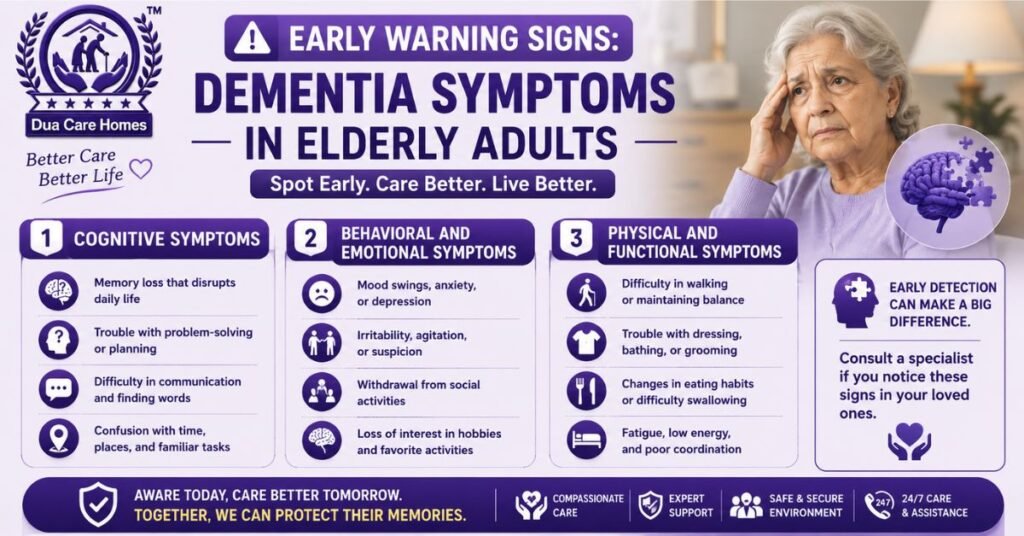
Dementia symptoms in elderly patients rarely appear overnight. They build gradually and are often dismissed as “just old age.” Recognizing the pattern early allows families to seek diagnosis while treatment options are still most effective.
1. Cognitive Symptoms
These are the changes most people associate with dementia — problems with thinking and understanding.
- Frequently forgetting recent conversations or events
- Struggling to find the right words mid-sentence
- Getting lost in a once-familiar neighborhood
- Difficulty managing money, bills, or medications
- Poor judgment or decision-making
- Trouble planning or completing multi-step tasks (cooking, chores)
2. Behavioral and Emotional Symptoms
Dementia does not only affect memory — it reshapes mood and personality too.
- Increased anxiety, agitation, or irritability
- Withdrawal from social activities and hobbies
- Sudden mood swings without clear triggers
- Apathy or loss of interest in things once enjoyed
- Repetitive behaviors or questions
- Suspicion or unfounded distrust of family members
3. Physical and Functional Symptoms
- Difficulty with balance and coordination
- Changes in sleep patterns (daytime drowsiness, night wandering)
- Trouble swallowing in later stages
- Decline in personal hygiene and self-care
- Slower physical movements
Quick Tip for Families: A single forgetful moment is normal. A pattern of memory loss that disrupts daily routines is the signal to consult a doctor.
Causes of Dementia in Elderly Adults
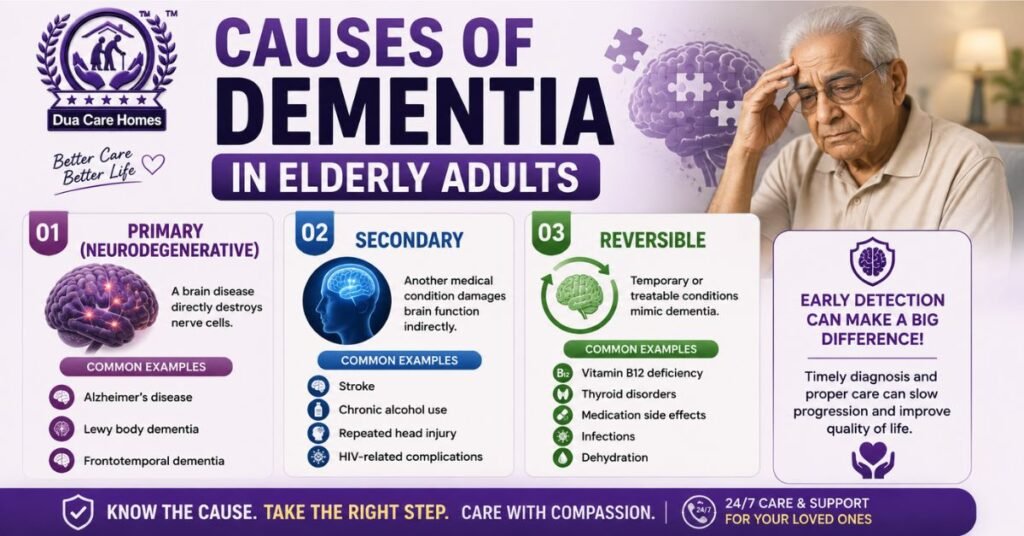
Dementia symptoms in elderly people stem from disruption of nerve cell connections in the brain. Doctors generally group the causes into three categories, based on guidance from the National Institute on Aging.
| Cause Category | What Happens | Common Examples |
|---|---|---|
| Primary (Neurodegenerative) | A brain disease directly destroys nerve cells | Alzheimer’s disease, Lewy body dementia, frontotemporal dementia |
| Secondary | Another medical condition damages brain function indirectly | Stroke, chronic alcohol use, repeated head injury, HIV-related complications |
| Reversible | Temporary or treatable conditions mimic dementia | Vitamin B12 deficiency, thyroid disorders, medication side effects, infections, dehydration |
Key Risk Factors That Increase Dementia Risk
- Age — risk rises sharply after 65
- Family history and genetics
- Cardiovascular conditions — high blood pressure, diabetes, high cholesterol
- Lifestyle factors — smoking, physical inactivity, poor diet, excessive alcohol use
- Hearing loss — often mistaken for cognitive decline but linked to increased dementia risk
- Social isolation and untreated depression
- Traumatic brain injury history
While age and genetics cannot be changed, cardiovascular health and lifestyle factors are within a family’s control — early intervention here can meaningfully lower risk, according to ongoing research highlighted by the World Health Organization.
Types of Dementia in Elderly Adults
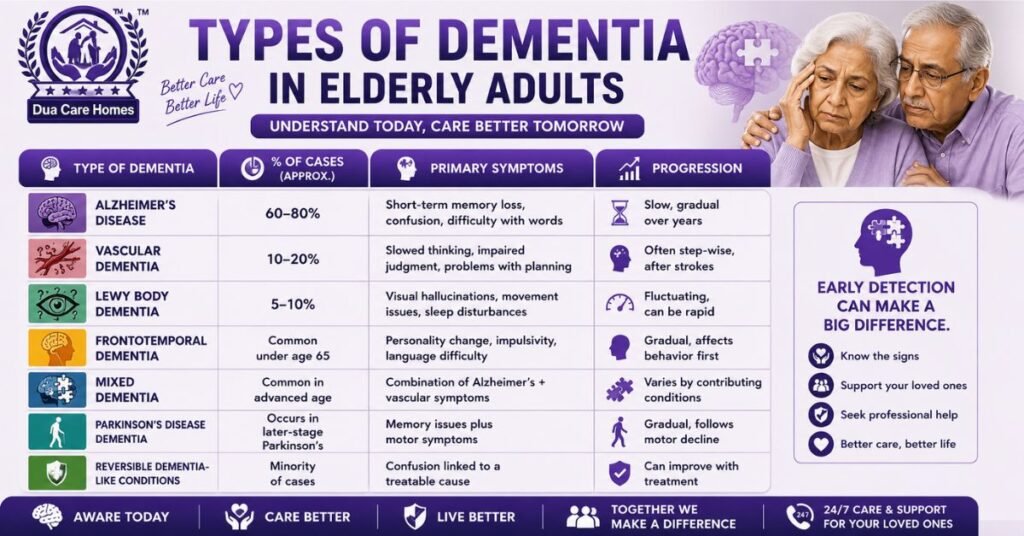
Not all dementia is the same. The type affects which symptoms appear first, how the condition progresses, and which treatments help most.
| Type of Dementia | % of Cases (approx.) | Primary Symptoms | Progression |
|---|---|---|---|
| Alzheimer’s Disease | 60–80% | Short-term memory loss, confusion, difficulty with words | Slow, gradual over years |
| Vascular Dementia | 10–20% | Slowed thinking, impaired judgment, problems with planning | Often step-wise, after strokes |
| Lewy Body Dementia | 5–10% | Visual hallucinations, movement issues, sleep disturbances | Fluctuating, can be rapid |
| Frontotemporal Dementia | Common under age 65 | Personality change, impulsivity, language difficulty | Gradual, affects behavior first |
| Mixed Dementia | Common in advanced age | Combination of Alzheimer’s + vascular symptoms | Varies by contributing conditions |
| Parkinson’s Disease Dementia | Occurs in later-stage Parkinson’s | Memory issues plus motor symptoms | Gradual, follows motor decline |
| Reversible Dementia-Like Conditions | Minority of cases | Confusion linked to a treatable cause | Can improve with treatment |
Understanding the Stages of Dementia
Dementia generally progresses through three broad stages, though the pace varies from person to person:
- Early Stage: Mild forgetfulness, difficulty finding words, some trouble with complex tasks — the person is usually still independent.
- Middle Stage: Increased confusion, need for help with daily activities, noticeable personality changes, wandering behavior.
- Late Stage: Significant memory loss, difficulty communicating, full-time care needed for eating, mobility, and hygiene.
When Should You See a Doctor?
Contact a healthcare provider if an elderly loved one shows any combination of the following, persisting for weeks rather than days:
- Repeated memory lapses that disrupt daily life
- Getting lost in familiar places
- Sudden difficulty managing finances or medications
- Noticeable personality or mood changes
- Withdrawal from social activities they once enjoyed
Early diagnosis matters. Many reversible causes — like thyroid problems or vitamin deficiencies — can be corrected, and even progressive types of dementia respond better to treatment and care planning when caught early.
Home Care vs. Assisted Living vs. Old Age Home: Which Is Right for Dementia Care?
Families often struggle to decide how to support a parent or grandparent showing dementia symptoms. Here’s an honest comparison of the three most common care paths.
| Factor | Home Care (Family/Caregiver) | Assisted Living Facility | Dedicated Old Age Home (like Dua Old Age Home) |
|---|---|---|---|
| Medical supervision | Limited, depends on hired staff | Moderate | Trained caregivers + regular health monitoring |
| Social engagement | Often minimal | Structured activities | Community living, recreational activities |
| Safety for wandering/falls | Risky without modifications | Better, but not specialized | Purpose-built safe environment |
| Cost predictability | Variable, can spike with emergencies | Moderate to high | Transparent, structured care plans |
| Family caregiver burden | High (stress, burnout common) | Reduced | Minimal — professional team manages daily care |
| Emotional/community support | Depends on family availability | Peer interaction | Dedicated companionship & routine |
For families who cannot provide round-the-clock supervision, a dedicated senior care facility is often the safest and most compassionate choice — especially once dementia symptoms in elderly family members progress beyond early stage.
Why Families Trust Dua Old Age Home for Dementia & Senior Care
When dementia symptoms in elderly parents become difficult to manage at home, Dua Old Age Home offers a structured, compassionate alternative built specifically around senior wellbeing.
Here’s what sets Dua Old Age Home apart for families navigating dementia care:
- Trained caregiving staff experienced in handling memory loss, confusion, and behavioral changes with patience and dignity
- Personalized care plans tailored to each resident’s stage of dementia and medical needs
- Regular health monitoring including medication management and routine check-ups
- Safe, home-like environment designed to reduce wandering risk and disorientation
- Emotional and social support through community activities that help slow cognitive decline
- Peace of mind for families, who no longer have to manage caregiving alone while balancing work and personal life
If you’re searching for a reliable, experienced senior care partner for a loved one showing early or advanced dementia symptoms, Dua Old Age Home provides the professional, round-the-clock support that makes daily life safer and more dignified — for residents and families alike.
Frequently Asked Questions (FAQs)
1. What is the very first sign of dementia in elderly adults?
The earliest sign is usually short-term memory loss — forgetting recent conversations, appointments, or where items were placed — while older memories remain intact.
2. Can dementia symptoms in elderly people be reversed? Some can. If the cause is a vitamin deficiency, thyroid issue, infection, or medication side effect, symptoms often improve significantly with proper treatment. Progressive types like Alzheimer’s cannot be reversed but can be managed.
3. At what age do dementia symptoms usually start?
Risk increases sharply after age 65, though early-onset dementia can occur before 65 in rarer cases, particularly frontotemporal dementia.
4. Is memory loss always a sign of dementia?
No. Occasional forgetfulness is normal aging. Dementia is diagnosed when memory loss is persistent and disrupts a person’s independence and daily functioning.
5. How is dementia diagnosed?
Doctors typically use cognitive tests, blood work, brain imaging (MRI/PET scans), and a review of medical history to rule out reversible causes before confirming a dementia diagnosis.
6. Should an elderly person with dementia live at home or in a care facility?
It depends on the stage of dementia and available family support. Once symptoms affect safety (wandering, forgetting medication, falls), a professional facility like Dua Old Age Home is often recommended for consistent, safe care.
Final Thoughts
Recognizing dementia symptoms in elderly loved ones early — and understanding their underlying causes and types — empowers families to act with confidence rather than fear. Whether the path forward involves medical treatment, home adaptations, or professional senior care, the goal remains the same: preserving safety, dignity, and quality of life. For families ready to explore compassionate, expert-led dementia care, Dua Old Age Home stands ready to support every step of that journey.
This article is for informational purposes only and is not a substitute for professional medical advice. Always consult a qualified healthcare provider for diagnosis and treatment.
Follow Us On : Facebook, Twitter, Instagram
You May Like : Old Age Home, Best Old Age Home, Old Age Home in Noida


