

Choosing the right old age home for your parents is one of the biggest decisions a family faces. It is more than just a place to stay — it means safety, medical support, companionship, and dignity for seniors who need daily care and attention. This guide explains what the term really means, how to find a trusted old age home near you, the genuine benefits of professional elder care, and a simple checklist to pick the best facility in 2026, so your family gets compassionate and reliable care every single day.
What Is Meant by Old Age Home?
An old age home, also called a senior care home or elder care facility, is a residential setup built specifically for senior citizens who need daily assistance, companionship, medical monitoring, or simply a safer environment than living alone. It offers trained staff, structured routines, nutritious meals, and a community of peers instead of isolation.
Old age homes are not only for elderly people who have no family support. Many seniors today choose to move into a care home voluntarily — because their children live abroad, work long hours, or because the senior wants professional medical supervision that a regular household cannot offer.
Old Age Home vs Nursing Home vs Assisted Living
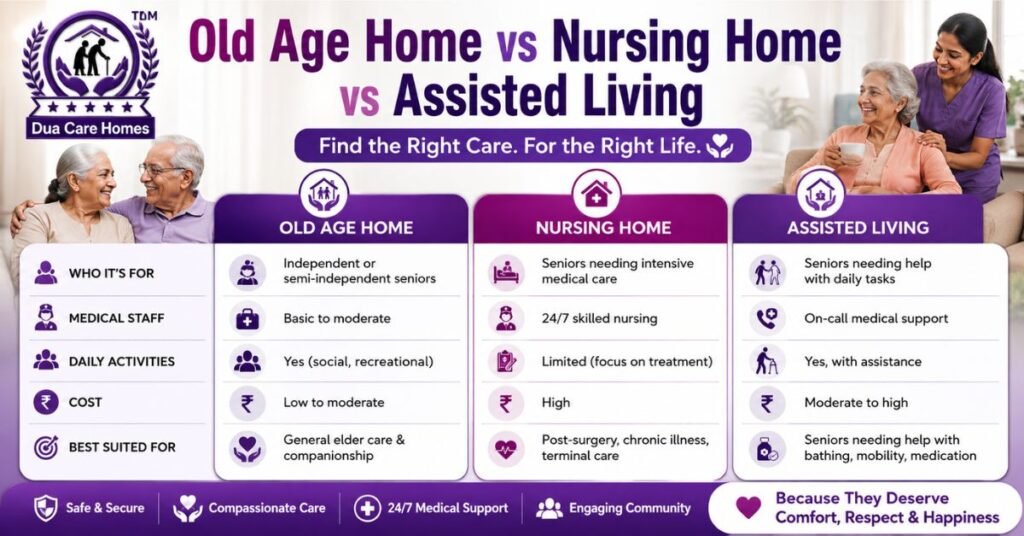
People often confuse these three terms. Here is a simple comparison to clear the confusion:
| Feature | Old Age Home | Nursing Home | Assisted Living |
|---|---|---|---|
| Who it’s for | Independent or semi-independent seniors | Seniors needing intensive medical care | Seniors needing help with daily tasks |
| Medical staff | Basic to moderate | 24/7 skilled nursing | On-call medical support |
| Daily activities | Yes (social, recreational) | Limited (focus on treatment) | Yes, with assistance |
| Cost | Low to moderate | High | Moderate to high |
| Best suited for | General elder care & companionship | Post-surgery, chronic illness, terminal care | Seniors needing help with bathing, mobility, medication |
Understanding this difference helps families pick the correct category before searching for a facility.
Types of Old Age Homes You Should Know About
Not every old age home is built for the same purpose. Knowing the different types helps you match the right facility to your parent’s actual needs instead of picking the first result that appears in search.
- Government-run old age homes — Funded and managed by state welfare departments, usually free or low-cost, meant for economically weaker seniors.
- Charitable/NGO-run homes — Operated by trusts and religious or social organizations, often subsidized and focused on seniors with little or no family support.
- Private old age homes — Fee-based facilities offering a wide range of services, from basic stay to premium assisted living.
- Retirement communities — Independent living setups for active, self-sufficient seniors who want a community lifestyle rather than intensive care.
- Specialized care homes — Facilities focused on specific needs such as dementia care, palliative care, or post-surgical recovery.
Identifying which category fits your family’s requirement narrows your search considerably and prevents wasted time visiting unsuitable facilities.
Signs It May Be Time to Consider an Old Age Home
Many families delay this decision out of guilt or uncertainty. Recognizing the right signs early can actually improve a senior’s quality of life rather than diminish it. Consider a care home if you notice:
- Frequent falls or difficulty managing daily tasks like bathing, cooking, or medication.
- Increasing forgetfulness, confusion, or early signs of dementia.
- Growing loneliness or withdrawal after the loss of a spouse or friends.
- Family members unable to provide consistent supervision due to work or distance.
- Repeated hospital visits that indicate a need for closer medical monitoring.
- The senior themselves expressing interest in more social interaction and structured support.
None of these signs mean a family has failed. In many cases, moving to a well-chosen old age home leads to better health outcomes and a happier daily routine than staying isolated at home.
Common Mistakes Families Make While Choosing an Old Age Home
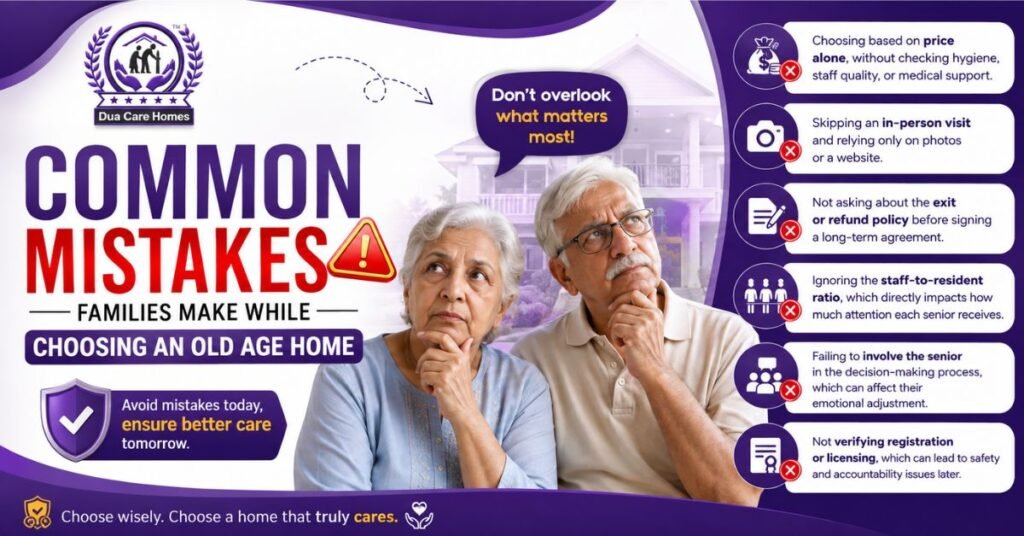
Avoiding these frequent errors can save families from stress and regret later:
- Choosing based on price alone, without checking hygiene, staff quality, or medical support.
- Skipping an in-person visit and relying only on photos or a website.
- Not asking about the exit or refund policy before signing a long-term agreement.
- Ignoring the staff-to-resident ratio, which directly impacts how much attention each senior receives.
- Failing to involve the senior in the decision-making process, which can affect their emotional adjustment.
- Not verifying registration or licensing, which can lead to safety and accountability issues later.
Taking a little extra time during the research phase almost always leads to a better long-term outcome for everyone involved.
Why the Demand for Old Age Homes Is Rising in India
India’s elderly population is growing faster than ever. According to the Technical Group on Population Projections, India had close to 138 million elderly citizens in 2021, and this number is projected to rise by another 56 million by 2031. At the same time, nuclear families, migration for jobs, and busy urban lifestyles have made it harder for many households to provide round-the-clock elder care.
Some of the key reasons families now consider an old age home include:
- Medical needs that require trained supervision (diabetes, mobility issues, dementia, cardiac conditions)
- Working children who cannot be present at home during the day
- NRI families whose parents live alone in India
- Loneliness and isolation after the loss of a spouse
- Safety concerns such as falls, wandering, or medication errors
- Desire for community — many seniors genuinely enjoy the social life a good care home offers
This shift means an old age home is no longer viewed only as a “last resort” — it is increasingly a proactive, informed choice for better quality of life in the senior years.
Old Age Home Near Me: How to Search the Right Way
Typing “old age home near me” into Google is only the first step. A smart search process saves families from making a rushed or wrong decision. Here’s how to do it properly:
- Define the care level needed — independent living, semi-assisted, or full medical support.
- Set a location radius — closer homes make family visits easier and more frequent.
- Check registration and licensing — the facility should be registered under applicable state welfare rules.
- Read verified reviews — Google reviews, testimonials, and word-of-mouth from other families.
- Visit in person — photos and websites never show the full picture; a physical visit does.
- Ask about staff-to-resident ratio — this directly affects the quality of daily care.
- Compare pricing and inclusions — some homes bundle medical care, food, and activities; others charge separately.
If you are searching for a dependable, well-reviewed option, Dua Old Age Caring Institution is worth shortlisting. It is known for combining professional caregiving with a warm, home-like environment, making the transition easier for both seniors and their families.
Benefits of Old Age Homes
A well-run old age home offers far more than just accommodation. Here are the real, practical benefits families notice:
1. Professional Medical Supervision
Trained staff monitor medication schedules, vital signs, and chronic conditions — something that is difficult to manage consistently at home.
2. Social Engagement and Mental Wellness
Isolation is one of the biggest health risks for seniors. Group activities, festivals, games, and daily interaction significantly reduce depression and cognitive decline.
3. Safety and Emergency Response
Old age homes are built with senior-friendly infrastructure — grab bars, ramps, non-slip flooring — plus staff trained to respond quickly to falls or medical emergencies.
4. Balanced Nutrition
Meals are planned around age-specific dietary needs, which is often hard to maintain in a busy household.
5. Relief for Family Caregivers
Caregiving is physically and emotionally demanding. A good facility allows family members to stay involved without carrying the entire burden alone.
6. Structured Daily Routine
Fixed schedules for meals, medication, light exercise, and rest help seniors maintain better physical and mental health.
Benefits Comparison: Old Age Home vs Living Alone at Home
| Factor | Old Age Home | Living Alone at Home |
|---|---|---|
| Medical monitoring | Regular, structured | Depends on family visits |
| Social interaction | Daily, built-in | Often limited |
| Emergency response | Immediate, on-site staff | May be delayed |
| Nutrition | Planned, age-appropriate | Inconsistent |
| Safety infrastructure | Senior-friendly design | Rarely modified |
| Family peace of mind | Higher | Often lower due to worry |
How to Choose the Right Old Age Home: Complete Checklist
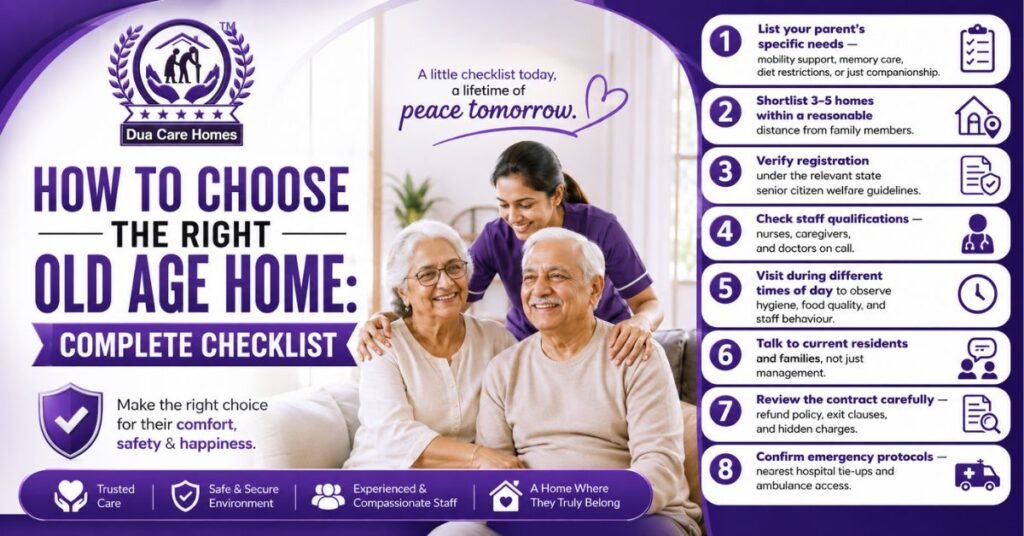
Choosing the right facility is not something to decide in a single day. Use this checklist to compare shortlisted homes objectively.
Step-by-Step Selection Process
- List your parent’s specific needs — mobility support, memory care, diet restrictions, or just companionship.
- Shortlist 3–5 homes within a reasonable distance from family members.
- Verify registration under the relevant state senior citizen welfare guidelines.
- Check staff qualifications — nurses, caregivers, and doctors on call.
- Visit during different times of day to observe hygiene, food quality, and staff behaviour.
- Talk to current residents and families, not just management.
- Review the contract carefully — refund policy, exit clauses, and hidden charges.
- Confirm emergency protocols — nearest hospital tie-ups and ambulance access.
Key Factors Table
| Factor | What to Check |
|---|---|
| Location | Distance from family, connectivity, neighbourhood safety |
| Medical facility | On-site nurse, doctor visit frequency, emergency tie-ups |
| Hygiene | Cleanliness of rooms, washrooms, and common areas |
| Staff ratio | Number of caregivers per resident |
| Food quality | Variety, hygiene, dietary customization |
| Activities | Recreational, spiritual, and physical engagement programs |
| Cost transparency | Clear breakdown with no hidden fees |
| Reviews & reputation | Google reviews, references, years of operation |
A facility that scores well across most of these points is generally a safe, reliable choice for long-term care.
Legal and Safety Considerations
Families should also be aware of the legal framework around elder care in India. The Maintenance and Welfare of Parents and Senior Citizens Act, 2007 provides senior citizens the legal right to maintenance from their children and establishes guidelines for old age homes run by state governments and private organizations. Always confirm that a facility is properly registered and follows these welfare guidelines before signing any agreement.
The World Health Organization also highlights that healthy ageing depends heavily on supportive environments, access to care, and social inclusion — all factors a well-run old age home is designed to provide.
Cost of Old Age Homes in India (2026 Estimate)
Pricing varies widely depending on location, facilities, and level of medical care. Here is a general estimate to help with budgeting:
| Type of Facility | Approximate Monthly Cost (INR) | What’s Usually Included |
|---|---|---|
| Government/charitable homes | Free – ₹5,000 | Basic stay, food, minimal medical support |
| Mid-range private homes | ₹8,000 – ₹20,000 | Room, meals, basic nursing, activities |
| Premium/assisted living | ₹20,000 – ₹60,000+ | Private rooms, full medical staff, therapies, luxury amenities |
Note: Always request a written cost breakdown, as many facilities charge separately for medical consultations, physiotherapy, or specialised diets.
Why Families Trust Dua Old Age Caring Institution

If you are still exploring options, Dua Old Age Caring Institution stands out for families who want more than just a facility — they want genuine care. Here’s what makes it a preferred choice:
- Compassionate, trained caregiving staff who treat residents with dignity and patience
- Clean, safe, and senior-friendly infrastructure
- Balanced, nutritious meals planned around individual health needs
- Regular health monitoring and quick access to medical support
- Engaging daily activities that keep residents socially and mentally active
- Transparent pricing with no hidden charges
- Family involvement encouraged through regular visits and updates
Families searching for a dependable old age home near them can learn more about the facility, services, and admission process by visiting the official website: duaoldagecaringinstitution.com.
Helping a Senior Adjust to an Old Age Home
Moving into a new environment can feel overwhelming for a senior, even when the facility is excellent. A smoother transition usually depends on how the move is handled emotionally, not just logistically.
- Involve them early. Let your parent visit shortlisted homes and take part in the final decision wherever possible.
- Personalize their space. Familiar photos, blankets, or small belongings make a new room feel less foreign.
- Visit consistently, especially in the first few weeks, to ease the emotional adjustment.
- Encourage participation in group activities early on, since social bonds form the foundation of a positive experience.
- Stay patient. It is normal for adjustment to take a few weeks; frequent communication with staff helps track how well your parent is settling in.
A thoughtful transition often turns an old age home from “a place they had to move to” into a community they genuinely feel comfortable calling home.
Frequently Asked Questions
1. What is meant by old age home? An old age home is a residential facility designed for senior citizens who need daily assistance, companionship, or medical supervision. It provides food, shelter, healthcare support, and social engagement in a structured, safe environment.
2. How do I find an old age home near me?
Search online with your city name, check registration and reviews, shortlist a few options, and visit each one in person before making a final decision.
3. What are the main benefits of an old age home?
Key benefits include professional medical supervision, structured nutrition, social engagement, safety infrastructure, and relief for family caregivers who cannot provide full-time care.
4. How do I choose the right old age home?
Assess your parent’s specific medical and lifestyle needs, verify the facility’s registration, check staff qualifications and hygiene, visit in person, and review the cost structure before committing.
5. Are old age homes only for people without family support?
No. Many seniors today move into care homes voluntarily for better medical supervision, safety, and social interaction, even when they have supportive families.
6. How much does an old age home cost in India?
Costs range from free (government/charitable homes) to ₹60,000+ per month for premium assisted living facilities, depending on location and services included.
Conclusion
Choosing an old age home is ultimately about giving your parents a safer, healthier, and more dignified stage of life — not about stepping away from responsibility. A good facility combines medical care, companionship, and comfort in a way that benefits both seniors and their families.
If you’re currently comparing old age homes near you, take the time to visit in person, ask direct questions, and check the facts covered in this guide. For families looking for compassionate, transparent, and reliable elder care, Dua Old Age Caring Institution is a trusted option worth visiting to see the difference genuine care can make.
Follow Us On : Facebook, Twitter, Instagram
You May Like : Old Age Home, Best Old Age Home, Old Age Home in Noida


