

Looking for the right bed sore treatment for a loved one who is bedridden or wheelchair-bound? You are not alone — pressure ulcers affect millions of immobile and elderly patients every year, and early bed sore treatment can mean the difference between a quick recovery and a life-threatening infection. This guide explains how bed sores are diagnosed, breaks down 10 proven treatment methods by stage, and shows you exactly when professional nursing care becomes necessary.
What Are Bed Sores?
Bed sores — also called pressure ulcers, pressure injuries, or decubitus ulcers — are areas of damaged skin and underlying tissue caused by prolonged pressure on the skin. They typically develop over bony areas such as the hips, tailbone, heels, elbows, shoulder blades, and the back of the head.
They occur when a person is restricted to a bed, wheelchair, or chair and doesn’t change position often enough. Reduced blood flow to the skin causes tissue damage that can progress from mild redness to a deep, open wound within just a few hours if left unaddressed.
According to Johns Hopkins Medicine, it’s important to begin treatment right away — even at the earliest stage — because bed sores can worsen quickly, and the most severe cases may require hospitalization or surgery.
Who Is Most at Risk?
- Elderly patients with limited mobility
- People recovering from stroke, spinal cord injury, or surgery
- Patients with diabetes or poor circulation
- Individuals who are malnourished or dehydrated
- Bedridden patients in home care or nursing facilities
- People with incontinence (increased skin moisture and friction)
Common Causes and Risk Factors of Bed Sores
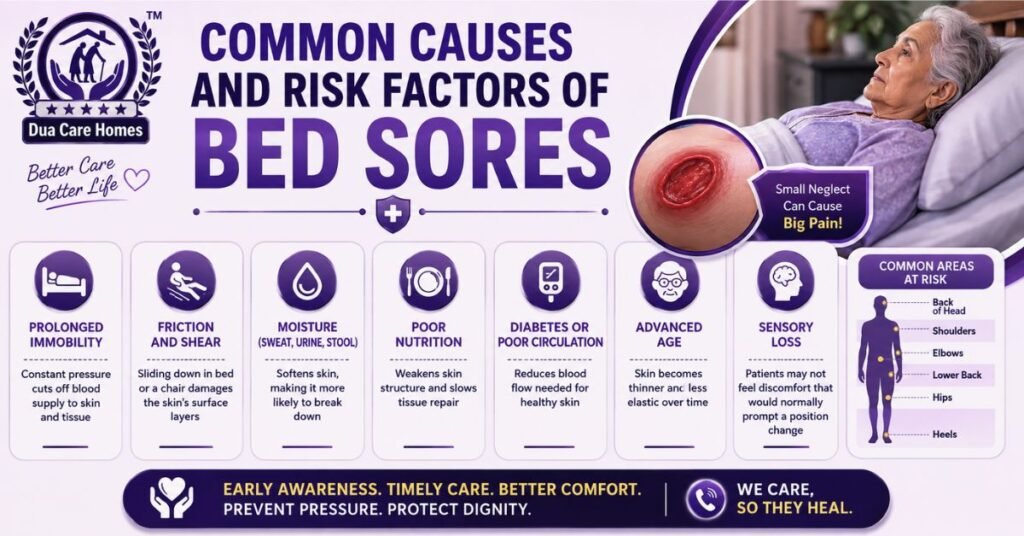
Bed sores don’t appear randomly — they develop from a combination of physical pressure and specific health vulnerabilities. Understanding these causes helps caregivers act before a sore ever forms.
| Cause / Risk Factor | Why It Matters |
|---|---|
| Prolonged immobility | Constant pressure cuts off blood supply to skin and tissue |
| Friction and shear | Sliding down in bed or a chair damages the skin’s surface layers |
| Moisture (sweat, urine, stool) | Softens skin, making it more likely to break down |
| Poor nutrition | Weakens skin structure and slows tissue repair |
| Diabetes or poor circulation | Reduces blood flow needed for healthy skin |
| Advanced age | Skin becomes thinner and less elastic over time |
| Sensory loss | Patients may not feel discomfort that would normally prompt a position change |
Caregivers who understand these risk factors can build a proactive routine — repositioning, skin checks, and moisture control — rather than reacting only after a sore has already formed.
Diagnosis of Bed Sores: How Doctors Identify Pressure Ulcers
Correct diagnosis is the foundation of effective bed sore treatment. A doctor, wound-care nurse, or trained caregiver typically diagnoses a bed sore through a physical skin examination, comparing the affected area to healthy surrounding skin.
Diagnostic Steps Doctors Follow
- Visual and physical skin assessment — checking color, temperature, swelling, and firmness of the skin.
- Pressing the reddened area — non-blanchable redness (skin that stays red when pressed) usually indicates an early-stage sore.
- Measuring wound size and depth — length, width, and depth are recorded to track healing progress.
- Checking for signs of infection — pus, odor, warmth, or fever.
- Reviewing mobility history and medical conditions — including diabetes, spinal injury, or vascular disease.
- Lab tests or imaging (in advanced cases) — blood tests or imaging may be used to rule out bone infection (osteomyelitis) in deep wounds.
Stages of Bed Sores (Diagnosis Table)
Doctors classify pressure ulcers using the staging system referenced by the National Pressure Ulcer Advisory Panel (NPUAP), which helps determine the right treatment approach.
| Stage | What It Looks Like | Severity |
|---|---|---|
| Stage 1 | Intact skin with non-blanchable redness; skin may feel warm or firm | Mild |
| Stage 2 | Partial-thickness skin loss; shallow open wound, blister, or abrasion | Moderate |
| Stage 3 | Full-thickness tissue loss; fat may be visible, wound is deeper | Severe |
| Stage 4 | Full-thickness loss with exposed muscle, tendon, or bone | Critical |
| Unstageable | Wound base covered by dead tissue (slough/eschar), depth unknown | Varies |
| Deep Tissue Injury | Purple/maroon discolored intact skin or blood-filled blister | Early warning |
Reference: NPUAP staging criteria via Medscape
Getting the stage right matters — Stage 1 sores often heal with basic care at home, while Stage 3 and 4 wounds usually need medical or surgical intervention.
10 Effective Ways for Bed Sore Treatment
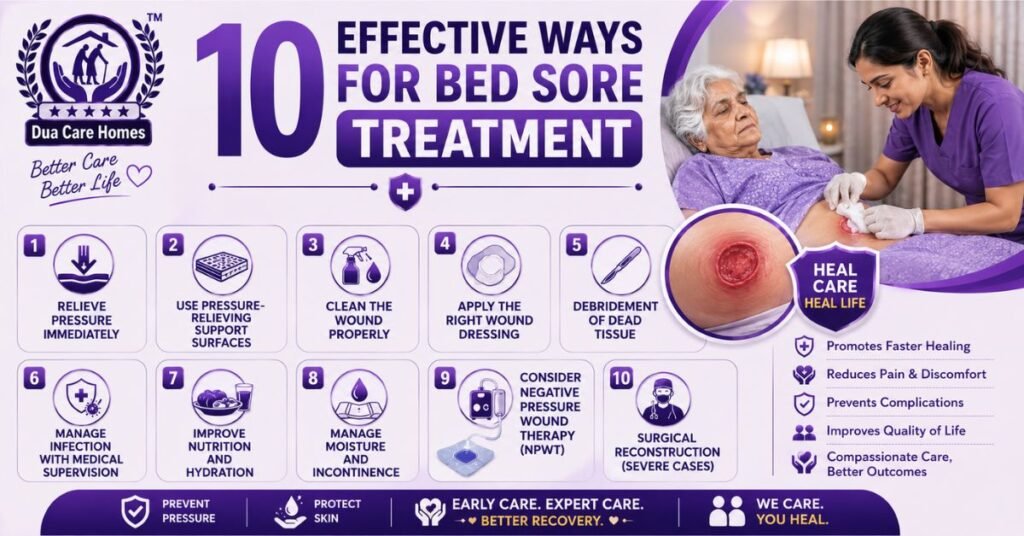
Below are 10 clinically recognized methods used in bed sore treatment, ranging from basic home care to advanced medical procedures.
1. Relieve Pressure Immediately
The single most important step in any bed sore treatment plan is removing pressure from the affected area. Reposition bedridden patients at least every 2 hours, and wheelchair users every 15–30 minutes.
2. Use Pressure-Relieving Support Surfaces
Special mattresses, foam overlays, gel cushions, and alternating-air mattresses redistribute body weight and reduce friction on vulnerable areas like the hips and tailbone.
3. Clean the Wound Properly
Gently clean the sore with saline solution or mild soap and water. Avoid vigorous scrubbing, which can further damage fragile skin — pat the area dry instead of rubbing it.
4. Apply the Right Wound Dressing
Dressing choice depends on the stage:
- Hydrocolloid dressings for shallow Stage 1–2 wounds
- Foam dressings for wounds with moderate drainage
- Alginate dressings for deeper, heavily draining wounds
- Antimicrobial dressings when infection risk is high
5. Debridement of Dead Tissue
For Stage 3 and 4 wounds, a healthcare professional may need to remove dead or infected tissue (debridement) to allow healthy tissue to regenerate and prevent infection from spreading.
6. Manage Infection with Medical Supervision
Signs of infection include increased redness, swelling, warmth, pus, foul odor, or fever. Topical antibiotics treat superficial infections, while oral or IV antibiotics are used for deeper or spreading infections — always under a doctor’s guidance.
7. Improve Nutrition and Hydration
Healing skin requires adequate protein, vitamin C, zinc, and fluids. Malnourished patients heal significantly slower, so a dietician-guided, protein-rich diet is often part of a serious treatment plan.
8. Manage Moisture and Incontinence
Skin exposed to sweat, urine, or stool becomes more prone to breakdown. Use pH-balanced cleansers, barrier creams (zinc oxide or dimethicone-based), and moisture-wicking bedding.
9. Consider Negative Pressure Wound Therapy (NPWT)
For non-healing or deep wounds, doctors may recommend vacuum-assisted wound closure, which uses gentle suction to draw out fluid and promote faster tissue growth.
10. Surgical Reconstruction (Severe Cases)
Stage 4 bed sores that expose bone or muscle and fail to respond to other treatments may require surgical flap reconstruction to close the wound and restore skin coverage.
Bed Sore Treatment by Stage — Quick Reference Table
| Stage | Recommended Treatment | Typical Healing Time* |
|---|---|---|
| Stage 1 | Pressure relief, skin protection, repositioning | 2–5 days |
| Stage 2 | Cleaning, moist wound dressing, pressure relief | 1–3 weeks |
| Stage 3 | Medical dressing, debridement, infection control | 1–4 months |
| Stage 4 | Surgical intervention, advanced wound care, nutrition therapy | 3+ months |
*Healing time varies by patient age, nutrition, mobility, and overall health condition. Always consult a physician for an accurate prognosis.
Home Care vs Professional Nursing Care: Which Is Right?
Many families struggle to decide whether a bed sore can be managed at home or needs professional care. Here’s an honest comparison to help you decide.
| Factor | Home Care | Professional Elder Care Facility |
|---|---|---|
| Best for | Stage 1 sores, early prevention | Stage 2–4 sores, high-risk or bedridden patients |
| Repositioning schedule | Depends on family availability | Structured, round-the-clock repositioning |
| Medical supervision | Limited, occasional doctor visits | On-site nursing staff and regular monitoring |
| Wound care expertise | Basic first aid knowledge | Trained caregivers and wound-care protocols |
| Infection risk management | Higher risk if missed early | Lower risk with continuous observation |
| Equipment access | May lack pressure-relief mattresses | Medical-grade beds, cushions, and mobility aids |
| Emotional & social support | Depends on family presence | Structured activities and companionship |
If a bed sore reaches Stage 2 or beyond, or the patient has diabetes, poor mobility, or incontinence, professional care significantly improves healing outcomes and reduces complications.
Types of Wound Dressings Used in Bed Sore Treatment
Choosing the correct dressing speeds up healing and lowers infection risk. Here’s a closer look at the most commonly used options in professional bed sore treatment.
| Dressing Type | Best For | Change Frequency |
|---|---|---|
| Hydrocolloid | Stage 1–2, low-drainage wounds | Every 3–7 days |
| Foam dressing | Moderate drainage wounds | Every 2–4 days |
| Alginate dressing | Deep wounds with heavy drainage | Every 1–3 days |
| Antimicrobial (silver) dressing | Wounds at risk of or showing infection | As directed by clinician |
| Transparent film | Very shallow wounds or protective cover | Every 3–7 days |
A wound-care nurse or physician should guide dressing selection, since using the wrong type can trap moisture, delay healing, or mask signs of infection.
Complications of Untreated Bed Sores
When bed sore treatment is delayed or inconsistent, complications can escalate quickly and become dangerous — particularly for elderly or immunocompromised patients. Common complications include:
- Cellulitis — a spreading bacterial skin infection
- Sepsis — a life-threatening bloodstream infection
- Osteomyelitis — infection that reaches the bone
- Joint or bone infection in deep Stage 4 wounds
- Chronic non-healing wounds that persist for months
- Increased risk of hospitalization for advanced or infected sores
These risks are precisely why timely diagnosis and a structured bed sore treatment plan — not delayed or inconsistent home remedies — are essential for bedridden and elderly patients.
Warning Signs: When to See a Doctor Immediately
Seek urgent medical attention if you notice:
- A wound that isn’t improving after several days of home care
- Increasing redness, warmth, or swelling around the sore
- Pus, foul odor, or drainage from the wound
- Fever or chills in the patient
- A wound that appears deep, black, or exposes muscle or bone
Untreated infected bed sores can lead to serious complications including sepsis, cellulitis, and bone infection (osteomyelitis), which the NIH/National Institute on Aging and wound-care specialists consider medical emergencies.
Preventing Bed Sores in Elderly and Bedridden Patients
Prevention is always easier — and less painful — than treatment. Key prevention strategies include:
- Reposition the patient every 2 hours (bed) or 15–30 minutes (wheelchair)
- Use pressure-relieving mattresses and cushions
- Keep skin clean, dry, and moisturized
- Maintain a protein and vitamin-rich diet
- Check skin daily for early redness or discoloration
- Manage incontinence promptly to reduce moisture exposure
- Encourage light movement or physiotherapy where possible
Why Families Trust Dua Old Age Home for Bed Sore & Elder Care
Bed sore treatment requires consistency — proper repositioning schedules, trained nursing staff, correct dressing techniques, and daily monitoring that most families simply cannot maintain alone alongside work and daily life.
Dua Old Age Home, based in Noida, has been providing dedicated senior care since 2018. The facility offers structured elder care programs designed specifically for bedridden and high-dependency patients, including:
- Trained nursing staff for regular repositioning and wound monitoring
- Personalized care plans for residents at risk of or recovering from bed sores
- Post-surgery and ICU-level elder care for patients needing intensive support
- Hygiene-focused living spaces to reduce infection and moisture-related skin breakdown
- Nutrition support to aid faster wound healing
- Dementia and Alzheimer’s care alongside general senior wellness programs
Families who choose Dua Old Age Home get peace of mind knowing their elderly loved ones receive round-the-clock, compassionate, and clinically informed care — exactly the kind of consistent attention that effective bed sore treatment demands. If you’re evaluating options for a parent or relative who is bedridden or at risk of pressure ulcers, reaching out to a dedicated elder care facility like Dua Old Age Home is a practical next step toward safer, faster healing.
Frequently Asked Questions (FAQs)
Q1: What is the fastest way to treat a bed sore at home?
For early Stage 1 sores, immediately relieving pressure, keeping the area clean and dry, and using a protective barrier cream are the fastest ways to prevent progression. Deeper wounds require professional wound care.
Q2: Can bed sores heal completely?
Yes, especially Stage 1 and 2 sores, which often heal within days to a few weeks with proper care. Stage 3 and 4 sores take significantly longer and may need medical or surgical treatment.
Q3: How often should a bedridden patient be repositioned?
Generally every 2 hours in bed and every 15–30 minutes when seated in a wheelchair, though this may vary based on individual risk factors.
Q4: Are bed sores a sign of neglect?
Not always — bed sores can develop quickly even with reasonable care, especially in high-risk patients. However, frequent or worsening sores in a care setting may indicate inadequate repositioning or monitoring.
Q5: What foods help heal bed sores faster?
Protein-rich foods, foods high in vitamin C and zinc, and adequate hydration all support faster tissue repair and wound healing.
Q6: When is surgery needed for a bed sore?
Surgery is typically considered for Stage 4 wounds that expose bone or muscle and haven’t responded to standard wound care and debridement.
Q7: How long does professional bed sore care take to show results?
Most Stage 1–2 sores respond to consistent professional care within one to three weeks, while Stage 3–4 wounds may take several months of structured nursing support, proper nutrition, and repositioning routines to fully close.
Q8: Can a good mattress alone prevent bed sores?
A pressure-relieving mattress helps significantly, but it works best combined with regular repositioning, skin checks, proper nutrition, and moisture management — no single tool replaces a complete care routine.
Final Thoughts
Effective bed sore treatment depends on catching the problem early, choosing the right care approach for each stage, and maintaining consistent, professional attention — something that’s often difficult to sustain at home alone. Whether you’re caring for a loved one yourself or exploring dedicated elder care support, understanding diagnosis and treatment options is the first step toward better outcomes and a more comfortable recovery.
This article is for informational purposes only and is not a substitute for professional medical advice. Always consult a qualified healthcare provider or wound-care specialist for diagnosis and treatment of pressure ulcers.
Sources
- Johns Hopkins Medicine – Bedsores
- NPUAP Pressure Injury Staging – Medscape
- National Institute on Aging (NIA)
Follow Us On : Facebook, Twitter, Instagram
You May Like : Old Age Home, Best Old Age Home, Old Age Home in Noida
