

When elderly cannot use washroom independently, it affects far more than hygiene — it touches safety, dignity, and mental health. Millions of families face this exact challenge every day, often quietly, because it feels too personal to discuss. This guide breaks down why it happens, the real problems elderly cannot use washroom situations create, and step-by-step solutions that actually work at home, backed by geriatric care research and caregiving best practices.
What Does “Elderly Cannot Use Washroom” Actually Mean?
The phrase covers a wide range of situations. It isn’t just one condition — it’s an umbrella term caregivers use when an older adult struggles with any part of the toileting process.
This can include:
- Not being able to walk to the bathroom in time
- Difficulty sitting down or standing up from the toilet
- Trouble unbuttoning or removing clothing
- Inability to clean themselves afterward
- Forgetting the location or purpose of the bathroom (common in dementia)
- Fear of falling that stops them from going alone
Each of these has a different root cause, and each needs a slightly different solution. Understanding which type of difficulty your loved one has is the first step toward fixing it.
Why Elderly Cannot Use Washroom: The Root Causes
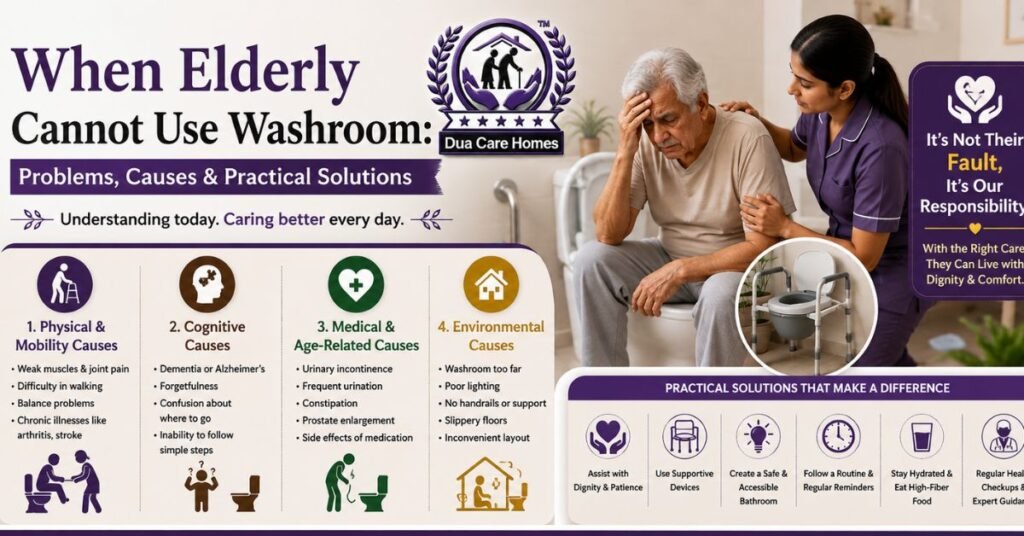
Toileting difficulty rarely has one single cause. According to the National Institute on Aging, it usually results from a combination of physical, cognitive, and environmental factors that build up gradually.
1. Physical & Mobility Causes
- Arthritis and joint stiffness that make sitting/standing painful
- Reduced muscle strength (sarcopenia) in the legs and core
- Poor balance, increasing fall risk on the way to the toilet
- Reduced hand dexterity, making it hard to manage clothing or hygiene
- Chronic conditions like Parkinson’s disease or stroke-related paralysis
2. Cognitive Causes
- Dementia or Alzheimer’s disease affecting memory of bathroom location
- Difficulty recognizing the urge to urinate or defecate
- Confusion about how to use the toilet itself
3. Medical & Age-Related Causes
- Urinary incontinence due to a weakened bladder or enlarged prostate
- Urinary tract infections (UTIs), which can cause sudden confusion in seniors
- Constipation from low fiber intake, dehydration, or medication side effects
- Side effects of sedatives, diuretics, or sleep medications
4. Environmental Causes
- Bathrooms located too far from the bedroom
- No grab bars, poor lighting, or slippery flooring
- Standard toilets that sit too low for weak knees and hips
Warning Signs a Senior Is Struggling in the Washroom
Many older adults hide toileting problems out of embarrassment. Watch for these early indicators:
| Warning Sign | What It May Indicate |
|---|---|
| Soiled or hidden laundry | Incontinence episodes being concealed |
| Avoiding fluids | Fear of needing the bathroom too often |
| Reduced bathroom visits | Difficulty getting there or fear of falling |
| Strong odor in bedroom/bathroom | Accidents not being cleaned promptly |
| Skin redness or sores | Prolonged contact with moisture (incontinence-associated dermatitis) |
| Sudden confusion | Possible UTI — always rule this out first |
If you notice two or more of these signs, it’s time for a conversation and, ideally, a doctor’s visit.
Problems Elderly Cannot Use Washroom Situations Create
When elderly cannot use washroom on their own, the consequences extend well beyond a single bathroom trip. These problems tend to compound one another over time.
Physical Health Problems
- Falls and injuries — Bathrooms account for a disproportionate share of home falls among seniors, largely due to wet floors and awkward transfers.
- Skin breakdown — Prolonged contact with urine or stool can cause rashes, sores, and infections.
- UTIs — Delayed or incomplete toileting increases infection risk.
- Dehydration — Some seniors deliberately drink less to avoid bathroom trips, which raises the risk of kidney problems and confusion.
Emotional & Psychological Problems
- Loss of independence and self-esteem
- Embarrassment that leads to social withdrawal
- Anxiety about “accidents” in public or in front of family
- In some cases, depression linked to loss of dignity
Caregiver-Related Problems
- Physical strain and back injuries from improper lifting
- Caregiver burnout from round-the-clock toileting support
- Family tension when the topic is avoided instead of addressed
Problem, Impact & Urgency Level
| Problem | Impact on Senior | Urgency |
|---|---|---|
| Falls near the toilet | Fractures, hospitalization | High |
| Untreated incontinence | Skin infection, isolation | Medium-High |
| Constipation | Pain, hemorrhoids, appetite loss | Medium |
| Cognitive confusion in bathroom | Accidents, wandering | High |
| Caregiver injury while assisting | Reduced caregiving capacity | Medium |
Solutions: How to Help When Elderly Cannot Use Washroom
The good news: most toileting challenges can be significantly improved with the right combination of home changes, routines, and assistive tools. Below is a practical, step-by-step framework used by professional caregivers.
1. Start With a Medical Check-Up
Before assuming a problem is “just aging,” rule out treatable causes.
- Ask the doctor to check for UTIs, prostate issues, or medication side effects
- Request a physical therapy assessment for balance and strength
- Discuss pelvic floor therapy for incontinence, which the Mayo Clinic notes can meaningfully reduce leakage in older adults
2. Modify the Bathroom for Safety
Small structural changes reduce fall risk dramatically.
- Install grab bars near the toilet and in the shower
- Add a raised toilet seat to reduce strain on knees and hips
- Use non-slip mats instead of loose bath rugs
- Improve lighting, including a night light for late-night trips
- Widen the doorway or remove thresholds if a wheelchair or walker is used
3. Set a Toileting Schedule
A predictable routine reduces accidents, especially for those with dementia or urgency issues.
- Prompt bathroom visits every 2–3 hours during the day
- Encourage a trip right after meals (the body’s natural response)
- Include a visit before bedtime and first thing in the morning
4. Choose the Right Assistive Products
Product-based solutions can restore a huge amount of independence.
| Product | Best For | Approx. Independence Gained |
|---|---|---|
| Raised toilet seat | Knee/hip pain, arthritis | High |
| Grab bars | Balance issues, fall prevention | High |
| Bedside commode | Limited mobility, night use | Medium-High |
| Long-handled wiping aid | Limited reach/flexibility | Medium |
| Bidet attachment | Hygiene for those who can’t wipe easily | High |
| Incontinence briefs/pads | Bladder/bowel control issues | Medium |
| Toilet safety frame | Sitting/standing support | High |
5. Adjust Clothing Choices
- Replace buttons and zippers with elastic waistbands or Velcro fasteners
- Choose looser-fitting pants that are easier to pull down quickly
- Avoid tights, leggings, or layered undergarments that slow the process
6. Use Safe Transfer Techniques
Caregivers should:
- Stand to the side, not directly behind, during transfers
- Bend at the knees, not the waist, when helping someone sit or stand
- Let the senior push off a grab bar rather than pulling on the caregiver
- Never let them grip a walker while sitting down — it can tip over
7. Address Cognitive-Related Toileting Issues
For seniors with dementia, the Alzheimer’s Association recommends:
- Labeling the bathroom door clearly with a sign or picture
- Keeping a clear, unobstructed, well-lit path to the bathroom
- Using simple, calm, one-step instructions
- Avoiding blame or scolding after accidents
8. Bring in Professional Support When Needed
- Home health aides can assist with daily toileting and hygiene
- Occupational therapists can recommend home modifications
- Continence nurses specialize in incontinence management plans
- Respite care gives family caregivers a much-needed break
Comparison: Home Solutions vs. Professional Care Support
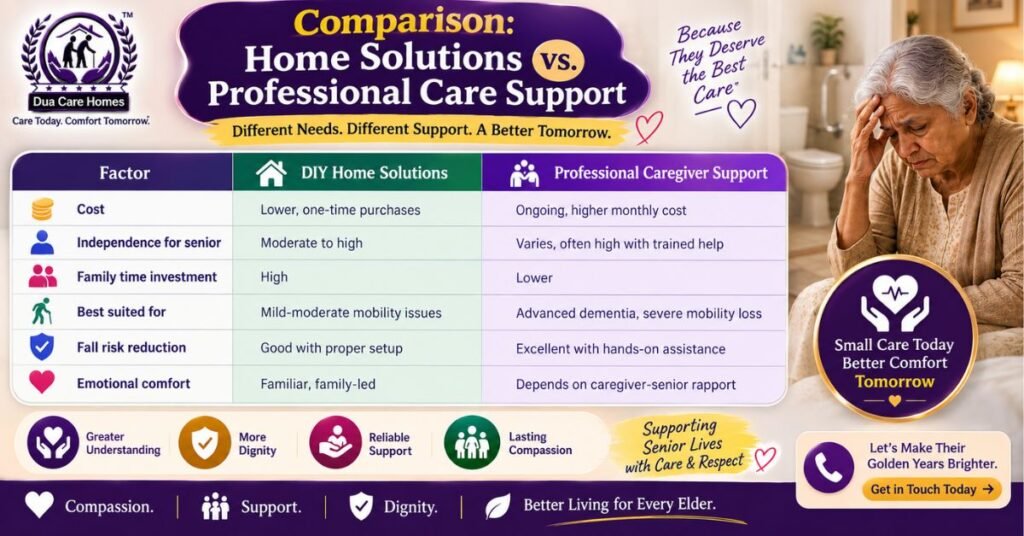
| Factor | DIY Home Solutions | Professional Caregiver Support |
|---|---|---|
| Cost | Lower, one-time purchases | Ongoing, higher monthly cost |
| Independence for senior | Moderate to high | Varies, often high with trained help |
| Family time investment | High | Lower |
| Best suited for | Mild-moderate mobility issues | Advanced dementia, severe mobility loss |
| Fall risk reduction | Good with proper setup | Excellent with hands-on assistance |
| Emotional comfort | Familiar, family-led | Depends on caregiver-senior rapport |
Most families find the best results come from combining both: home modifications for daily independence, plus periodic professional support for harder tasks.
Preventing Falls: The #1 Safety Priority
Bathroom falls are one of the leading causes of injury among older adults, according to research published via the CDC’s STEADI initiative. Prioritize these steps:
- Remove all bath mats that aren’t rubber-backed and non-slip
- Install at least two grab bars — one near the toilet, one in the shower
- Keep a phone or emergency alert device within reach of the toilet
- Ensure the path from bed to bathroom is completely clutter-free
- Consider a bedside commode if the bathroom is far or on another floor
When to Seek Immediate Medical Help
Contact a doctor promptly if you notice:
- Sudden inability to urinate at all
- Blood in urine or stool
- Sudden confusion alongside toileting difficulty (possible UTI)
- Signs of a fall-related injury, even if the senior insists they’re fine
- Rapid weight loss connected to reduced appetite from bathroom anxiety
Diet and Hydration: A Simple but Overlooked Fix
Many toileting problems trace back to what a senior eats and drinks, not just mobility. Adjusting diet is often the fastest, lowest-cost improvement families can make.
- Increase fiber gradually through oats, fruits, and vegetables to ease constipation without causing bloating
- Encourage regular water intake — dehydration thickens stool and irritates the bladder, making urgency worse, not better
- Limit caffeine and alcohol in the evening, since both increase urine production and nighttime trips
- Avoid large meals late at night, which can trigger urgency right when a senior is trying to sleep
- Track bladder irritants like spicy food, citrus, and artificial sweeteners if urgency is a recurring issue
A short conversation with a dietitian or the senior’s doctor can help build a simple eating plan that reduces both constipation and incontinence episodes over a few weeks.
Managing Nighttime Washroom Trips
Nighttime is when most bathroom-related falls happen, since seniors are groggy, the room is dark, and reaction time is slower.
- Keep a motion-sensor night light along the path to the bathroom
- Consider a bedside commode if the bathroom is more than a few steps away
- Limit fluids 2 hours before bed, but never restrict daytime hydration to compensate
- Use a bed alarm sensor that alerts caregivers when a senior gets up at night
- Keep the bedroom-to-bathroom path completely clear of cords, rugs, or furniture
These small adjustments consistently reduce nighttime fall rates, which is one of the biggest safety wins available to families.
Preserving Dignity: The Emotional Side of Care
Toileting assistance is one of the most sensitive caregiving tasks because it directly affects a senior’s sense of self-respect. How you handle it emotionally matters as much as the physical solution.
- Knock and ask before entering, even if assistance is expected
- Keep conversation calm and neutral — avoid discussing accidents in front of others
- Let the senior do whatever part of the task they still can, even if it takes longer
- Use matter-of-fact language (“Let’s get you cleaned up”) instead of language that implies shame
- Respect their preference for a same-gender caregiver where possible
Small gestures like these preserve a senior’s confidence and make them far more willing to accept help going forward, rather than hiding future problems out of embarrassment.
Cost Guide: Common Assistive Products
Budget is often a real concern for families making these changes. Here’s a general cost range for the most common solutions, so you can plan realistically.
| Product | Typical Cost Range | Notes |
|---|---|---|
| Grab bars (pair) | $20–$60 | DIY install possible; professional install costs more |
| Raised toilet seat | $25–$80 | Some models include arm rests |
| Toilet safety frame | $40–$100 | Good middle-ground before a full commode |
| Bedside commode | $50–$150 | Best for limited mobility or nighttime use |
| Bidet attachment | $30–$120 | Reduces need for wiping assistance |
| Non-slip bath mats | $15–$40 | Replace every 6–12 months as grip wears down |
| Incontinence products (monthly) | $30–$100+ | Varies heavily by usage level and brand |
Many of these products are eligible for reimbursement through certain insurance plans or flexible spending accounts, so it’s worth checking with a provider before purchasing.
Caregiver Well-Being Matters Too
Helping a loved one with toileting, day after day, is physically and emotionally demanding. Caregiver burnout is common, and it directly affects the quality of care a senior receives.
- Rotate responsibilities among family members when possible
- Use proper lifting technique or a transfer belt to protect your own back
- Schedule regular respite care, even a few hours a week, to recharge
- Join a caregiver support group — many are free and available online
- Don’t wait for a crisis to ask for outside help; early support prevents burnout
A caregiver who is well-supported is far better equipped to handle these challenges with patience, which directly benefits the senior’s comfort and dignity.
Frequently Asked Questions
Why do elderly people suddenly stop being able to use the washroom? A sudden change is often caused by a UTI, a new medication, a minor stroke, or an unnoticed fall. It should always be checked by a doctor rather than assumed to be normal aging.
What is the easiest way to help an elderly parent who refuses bathroom help?
Approach the topic gently, focus on safety rather than hygiene, and offer one small change at a time — like a grab bar — instead of a full bathroom overhaul at once.
Are bidets actually helpful for seniors with limited mobility?
Yes. Research reviews on bidet use in older adults found they reduce dependence on caregivers for cleaning and improve dignity, though some seniors need time to adjust to the technology.
How often should an elderly person be reminded to use the washroom?
Every two to three hours during the day is a commonly recommended interval, with additional prompts after meals and before bedtime.
Can toileting problems in the elderly be reversed?
Many can be significantly improved — not always fully reversed — through physical therapy, medication review, scheduled toileting, and home modifications. Cognitive-related causes are managed rather than cured.
Final Thoughts
When elderly cannot use washroom independently, it’s rarely a single, simple issue — it’s usually a mix of physical, cognitive, and environmental factors that build up over time. The encouraging part is that most of the problems elderly cannot use washroom situations cause are preventable or manageable with the right combination of medical care, home modifications, and compassionate caregiving. Start with a doctor’s evaluation, make the bathroom safer, and introduce assistive tools gradually — dignity and independence can be preserved far longer than most families expect.
Follow Us On : Facebook, Twitter, Instagram
You May Like : Old Age Home, Best Old Age Home, Old Age Home in Noida
