

Stroke & Paralysis are two of the most life-altering medical events a family can face, and getting patient care right in the first few hours often decides how much function a person recovers. This guide explains the symptoms and causes of stroke and paralysis in plain language, and walks through exactly what proper stroke patient care and paralysis patient care look like — at the hospital, at home, and in a professional facility — so families in India can make confident, informed decisions during a stressful time.
What Is a Stroke? A Quick Medical Overview
A stroke happens when blood flow to part of the brain is suddenly cut off or a blood vessel in the brain bursts. Brain cells begin to die within minutes because they are starved of oxygen and glucose. This is why doctors call stroke a “brain attack” — every minute of delay costs neurons, and neurons rarely come back once lost.
There are three main types of stroke:
| Type of Stroke | What Happens | Approximate Share of Cases |
|---|---|---|
| Ischemic Stroke | A clot blocks a blood vessel supplying the brain | Around 85% of all strokes |
| Hemorrhagic Stroke | A weakened blood vessel ruptures and bleeds into the brain | Roughly 10–15% of strokes |
| Transient Ischemic Attack (TIA) | A short-lived blockage that resolves on its own — a serious warning sign | Often precedes a major stroke |
A TIA should never be ignored. Many patients who suffer a major stroke report having had a “mini-stroke” days or weeks earlier that they dismissed as fatigue or dizziness.
What Is Paralysis? Understanding the Condition
Paralysis is the loss of the ability to move one or more muscles, usually because of damage to the nervous system rather than the muscles themselves. Stroke is actually the single most common cause of sudden paralysis in adults, but paralysis can also result from spinal cord injury, nerve disorders, or birth-related trauma.
Paralysis is generally classified by how much of the body is affected:
- Monoplegia – paralysis of a single limb
- Hemiplegia – paralysis of one side of the body, the classic pattern seen after a stroke
- Paraplegia – paralysis of both legs, usually from spinal cord damage
- Quadriplegia (Tetraplegia) – paralysis of all four limbs, typically from a high spinal cord injury
Paralysis can also be described as flaccid (muscles become limp and weak) or spastic (muscles become stiff and contract involuntarily), and this distinction changes how physiotherapy and daily paralysis patient care are planned.
Symptoms and Causes of Stroke
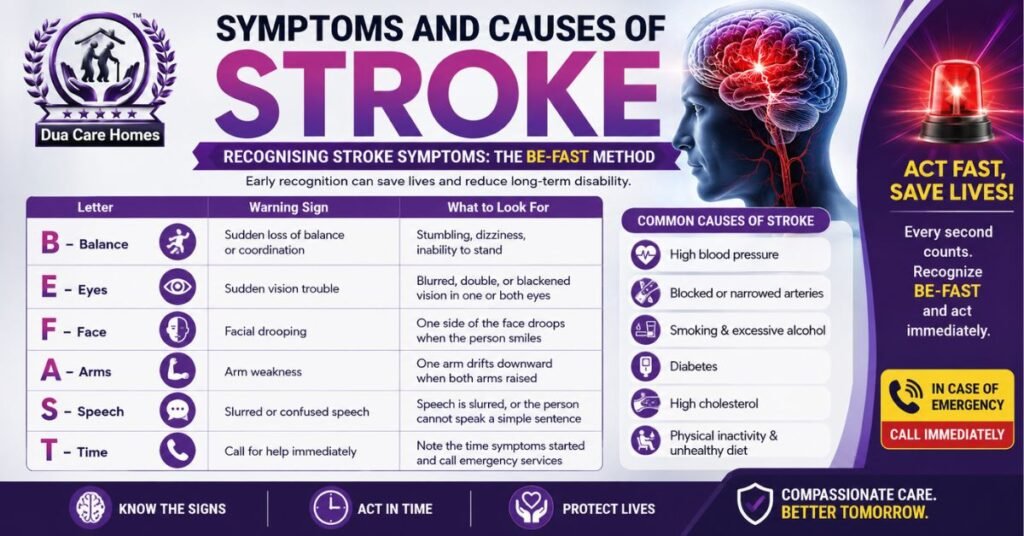
Recognising Stroke Symptoms: The BE-FAST Method
Doctors worldwide recommend the BE-FAST checklist because stroke symptoms appear suddenly and time lost is brain lost.
| Letter | Warning Sign | What to Look For |
|---|---|---|
| B – Balance | Sudden loss of balance or coordination | Stumbling, dizziness, inability to stand |
| E – Eyes | Sudden vision trouble | Blurred, double, or blackened vision in one or both eyes |
| F – Face | Facial drooping | One side of the face droops when the person smiles |
| A – Arms | Arm weakness | One arm drifts downward when both are raised |
| S – Speech | Slurred or confused speech | Speech is slurred, or the person cannot repeat a simple sentence |
| T – Time | Call for help immediately | Note the time symptoms started and call emergency services |
Other symptoms that can appear alongside these include a sudden, severe headache with no known cause, sudden confusion, and sudden numbness on one side of the body.
Common Causes and Risk Factors of Stroke
Short paragraphs make this easier to scan, so here are the leading contributors in numbered order:
- High blood pressure – the single biggest risk factor for both ischemic and hemorrhagic stroke.
- Diabetes – damages blood vessels over time and speeds up clot formation.
- High cholesterol – builds fatty plaques that narrow arteries feeding the brain.
- Heart disease and irregular heartbeat (atrial fibrillation) – a major source of clots that travel to the brain.
- Smoking and tobacco use – thickens blood and damages vessel walls.
- Obesity and physical inactivity – compound almost every other risk factor above.
- Age and family history – risk rises sharply after 55, and genetics play a real role.
- Excess alcohol consumption – linked strongly to hemorrhagic stroke.
Symptoms and Causes of Paralysis
Symptoms of Paralysis
Paralysis symptoms depend heavily on the underlying cause, but families should watch for:
- Sudden or gradual inability to move an arm, leg, or side of the body
- Loss of sensation, tingling, or numbness in the affected area
- Muscle stiffness (spasticity) or complete limpness (flaccidity)
- Loss of bladder or bowel control in spinal-cord-related cases
- Breathing difficulty when paralysis affects the chest muscles
Common Causes of Paralysis
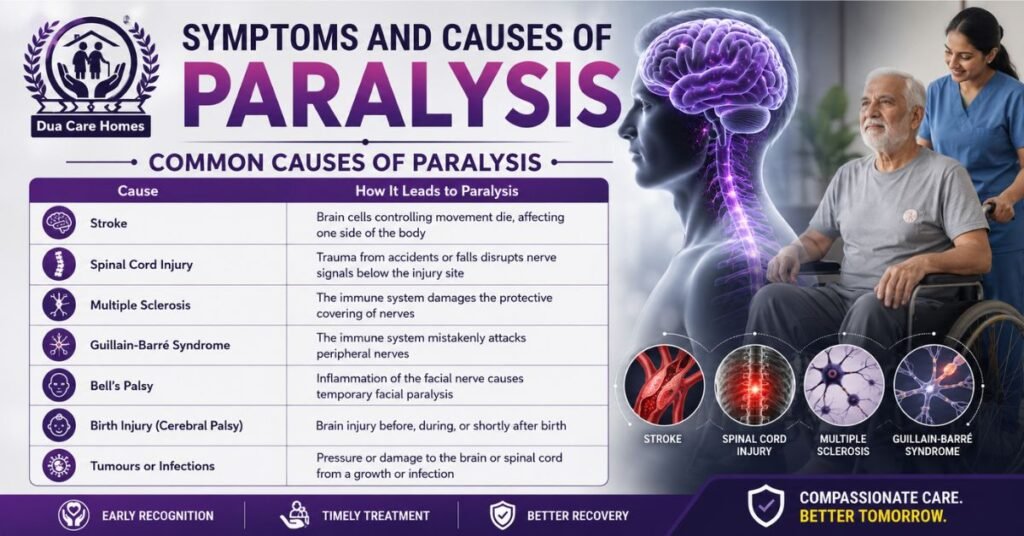
| Cause | How It Leads to Paralysis |
|---|---|
| Stroke | Brain cells controlling movement die, affecting one side of the body |
| Spinal Cord Injury | Trauma from accidents or falls disrupts nerve signals below the injury site |
| Multiple Sclerosis | The immune system damages the protective covering of nerves |
| Guillain-Barré Syndrome | The immune system mistakenly attacks peripheral nerves |
| Bell’s Palsy | Inflammation of the facial nerve causes temporary facial paralysis |
| Birth Injury (Cerebral Palsy) | Brain injury before, during, or shortly after birth |
| Tumours or Infections | Pressure or damage to the brain or spinal cord from a growth or infection |
Understanding the exact cause is essential because paralysis patient care for a stroke survivor looks quite different from care for someone with a spinal cord injury — the rehabilitation goals, equipment needs, and daily routines are not the same.
Stroke vs Paralysis: How They Compare
Families often confuse the two conditions because stroke frequently causes paralysis. This table clarifies the relationship.
| Aspect | Stroke | Paralysis |
|---|---|---|
| Definition | A sudden interruption of blood supply to the brain | Loss of muscle movement, which can be a result of stroke |
| Onset | Always sudden | Can be sudden (stroke, injury) or gradual (MS, tumours) |
| Root Cause | Vascular (blood flow) event in the brain | Nervous system or muscular damage, many possible causes |
| Reversibility | Some brain damage is permanent; function can improve with rehab | Depends entirely on the underlying cause and nerve damage |
| Primary Care Focus | Emergency stabilisation, then rehabilitation | Long-term mobility support, skin care, and rehabilitation |
| Typical Care Setting | Hospital first, then home or care facility | Home, rehabilitation centre, or long-term care facility |
Stroke Patient Care: A Complete Step-by-Step Guide
1. Immediate Care in the Golden Hour
The first three to four and a half hours after symptoms begin are often called the “golden window” because clot-dissolving treatment is most effective during this period. The only correct action when BE-FAST symptoms appear is to call emergency medical services immediately — never wait to see if symptoms pass, and never drive the patient yourself if an ambulance is available.
2. Hospital-Based Stroke Care
Once stabilised, stroke patients typically move through:
- Acute care, where doctors control blood pressure, prevent further clotting, and monitor brain swelling
- Early rehabilitation, which can begin within 24–48 hours in stable patients
- Multidisciplinary evaluation by neurologists, physiotherapists, speech therapists, and occupational therapists
3. Long-Term Stroke Patient Care at Home or in a Facility
Recovery does not end at hospital discharge — in many ways, it is just beginning. Effective ongoing stroke patient care covers these pillars:
| Care Pillar | What It Involves |
|---|---|
| Physiotherapy | Daily guided exercises to rebuild strength, balance, and coordination |
| Speech & Swallow Therapy | Rebuilding communication and reducing choking risk during meals |
| Medication Management | Precise, on-time dosing of blood thinners, BP medication, and statins |
| Fall-Proofing the Home | Grab bars, non-slip flooring, good lighting, and clutter-free walkways |
| Emotional Support | Counselling for post-stroke depression, which affects a large share of survivors |
| Regular Monitoring | Daily blood pressure checks and scheduled neurologist follow-ups |
Consistency matters more than intensity. A stroke patient who does moderate exercises every single day generally recovers better than one who does intense sessions sporadically.
Paralysis Patient Care: A Complete Step-by-Step Guide
Daily Essentials of Paralysis Patient Care
Caring for a paralysed patient is a full-time responsibility that blends medical precision with everyday compassion. The essentials include:
- Skin and Pressure Sore Prevention – Repositioning the patient every two hours is one of the most important habits in paralysis patient care, since prolonged pressure on one area can cause painful bedsores within days.
- Mobility and Transfer Assistance – Safe techniques for moving a patient from bed to wheelchair prevent injury to both the patient and the caregiver.
- Bladder and Bowel Care – Many paralysed patients need catheter care or a scheduled toileting routine to avoid infection.
- Range-of-Motion Exercises – Gentle daily stretching prevents joints from stiffening permanently (a condition called contracture).
- Respiratory Support – For patients with chest or diaphragm involvement, breathing exercises and, in some cases, assisted ventilation are essential.
- Nutrition and Hydration – A high-protein, high-fibre diet supports tissue repair and prevents constipation, which is common in immobile patients.
- Assistive Equipment – Wheelchairs, hospital beds with adjustable height, air mattresses, and mobility aids all reduce strain on both patient and caregiver.
Rehabilitation Goals in Paralysis Care
Rehabilitation for paralysis is not always about restoring full movement — often, it is about maximising independence within the patient’s current ability. Occupational therapists focus on adapting daily tasks (eating, dressing, writing) so the patient can do as much as possible unassisted, which has a measurable impact on mental health and self-esteem.
Common Complications in Stroke & Paralysis Patients
Both conditions share several overlapping risks that professional patient care is specifically designed to prevent.
| Complication | Why It Happens | Prevention Strategy |
|---|---|---|
| Bedsores (Pressure Ulcers) | Prolonged pressure on immobile skin | Repositioning every 2 hours, air mattresses |
| Aspiration Pneumonia | Swallowing difficulty leads to food entering the lungs | Speech therapy, careful feeding techniques |
| Deep Vein Thrombosis (DVT) | Immobility slows blood flow in the legs | Compression stockings, passive leg movement |
| Muscle Contractures | Joints stiffen from lack of movement | Daily range-of-motion exercises |
| Urinary Tract Infections | Catheter use or incomplete bladder emptying | Strict hygiene protocols, scheduled toileting |
| Depression and Isolation | Sudden loss of independence | Counselling, family involvement, social activities |
Diet and Nutrition Tips for Recovery
Nutrition plays a bigger role in recovery than most families realise. A well-planned diet supports tissue healing, prevents further vascular damage, and reduces constipation risk in immobile patients.
- Favour fresh vegetables, fruits, and whole grains over processed foods
- Keep salt intake low to help control blood pressure
- Include lean protein (dal, eggs, fish, chicken) to support muscle and tissue repair
- Ensure adequate fibre and fluids to prevent constipation, a common issue in bedridden patients
- Avoid trans fats and limit fried foods, which worsen cholesterol and vascular risk
- For patients with swallowing difficulty, food should be soft, well-mashed, or pureed under a speech therapist’s guidance
Why Professional Patient Care Makes a Measurable Difference
Family members almost always want to provide care themselves, and that instinct comes from love. But stroke and paralysis recovery genuinely requires clinical skills — correct repositioning technique, physiotherapy progressions, medication timing, and early recognition of complications — that are difficult to sustain at home without training and round-the-clock support.
This is exactly the gap that a dedicated, professionally staffed care facility is built to fill.
Dua Old Age Caring Institution: Trusted Stroke & Paralysis Patient Care

Dua Old Age Caring Institution has been supporting families across Noida, Gurgaon, Ghaziabad, and the wider Delhi-NCR region since 2018, and its dedicated Stroke Care and Paralysis Care programmes are built around exactly the pillars described above.
What families can expect from Dua’s approach to stroke patient care and paralysis patient care:
- Round-the-clock nursing supervision with a doctor-on-call system for medical emergencies
- In-house physiotherapy for mobility rebuilding, contracture prevention, and strength training
- Personalised care plans, built around each patient’s specific stroke type, paralysis pattern, and recovery stage
- Pressure sore and hygiene protocols managed by trained caregivers (GDAs) who understand repositioning schedules
- Nutritious, condition-specific meals — soft-diet, diabetic-friendly, or low-sodium as required
- Family transparency, including regular updates for NRI families managing care from abroad
- A dedicated in-house team structure — doctor, staff nurse, coordinator, and caregiver — working together daily, backed by on-call specialists
Because Dua Old Age Caring Institution combines clinical readiness with a genuinely warm, home-like environment, families get the best of both worlds: expert patient care without losing the dignity and comfort of a real home. For families evaluating options for a loved one recovering from a stroke or living with paralysis, a free consultation with Dua’s care team is a practical first step toward a safe, structured recovery plan.
How to Choose the Right Stroke or Paralysis Care Provider
Selecting the right facility is a decision that deserves real diligence. Use this checklist when evaluating any provider:
- Is qualified nursing staff available 24/7, with a doctor-on-call system?
- Does the facility offer in-house physiotherapy, not just outsourced visits?
- Are care plans personalised to the patient’s specific condition, or generic?
- What is the staff-to-resident ratio, and are caregivers background-verified?
- How transparent is the pricing, and are there hidden charges?
- Can family members visit freely and receive regular health updates?
- Is the facility clean, fall-proofed, and equipped with proper mobility aids?
A provider that can answer all seven points confidently is one worth trusting with a loved one’s recovery.
Frequently Asked Questions
Q1. Can a stroke patient fully recover from paralysis?
Many stroke patients regain significant function, especially with rehabilitation started early and continued consistently. Full recovery varies by stroke severity, location, and how quickly treatment began, but structured physiotherapy meaningfully improves outcomes.
Q2. How long does stroke patient care typically continue?
Active rehabilitation usually continues for 3–6 months, the period when the brain’s ability to rewire itself (neuroplasticity) is highest, though ongoing supportive care and monitoring often continue for years.
Q3. Is paralysis always permanent?
No. Paralysis from conditions like Bell’s Palsy or Guillain-Barré Syndrome is often temporary, while paralysis from severe stroke or spinal cord injury may be long-term, though partial recovery is common with consistent therapy.
Q4. What is the biggest risk for bedridden stroke or paralysis patients?
Pressure sores, aspiration pneumonia, and infections are the most common and most preventable complications, which is why trained repositioning and hygiene routines are so important.
Q5. When should a family consider a professional care facility over home care?
When medication management, physiotherapy consistency, or daily hygiene needs exceed what family members can safely manage — especially for bedridden or high-risk patients — a professional facility like Dua Old Age Caring Institution offers safer, more consistent care.
Conclusion
Recognising the symptoms and causes of stroke and paralysis early — and acting fast — can be the difference between a full recovery and permanent disability. Whether care happens at home or in a dedicated facility, the fundamentals stay the same: fast emergency response, consistent physiotherapy, careful nutrition, complication prevention, and emotional support.
For families in Noida, Gurgaon, Ghaziabad, and Delhi-NCR who want expert, compassionate support through this journey, Dua Old Age Caring Institution offers structured, medically supervised Stroke & Paralysis patient care that treats every resident like family. Reach out today to schedule a consultation and build a personalised recovery plan for your loved one.
Follow Us On : Facebook, Twitter, Instagram
You May Like : Old Age Home, Best Old Age Home, Old Age Home in Noida
